Kona Coffee Harvest Season: When to Visit and What Each Month Looks Like
Kona coffee is picked by hand from late August through January, and the farm you visit looks completely different depending on the month. This guide walks through the whole calendar, month by month, so you can time your visit to the part of the process you actually want to see.
Short answer
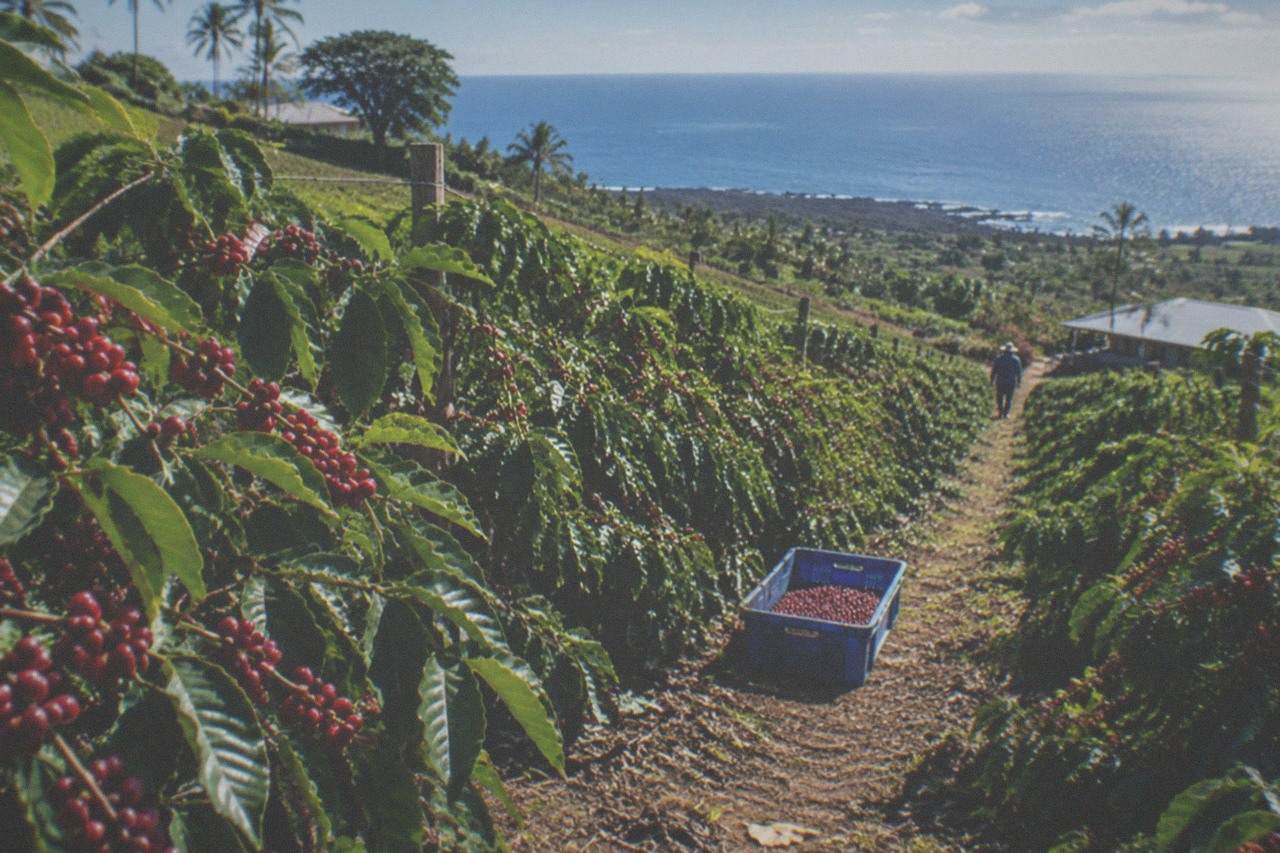
The Kona coffee harvest runs late August through January, with peak picking October to December. Farms in lower South Kona start earlier, higher elevations later. The 2025-26 Hawaii crop is forecast at 17.8 million pounds of cherry, down 20 percent from the prior season. Festival week, November 6 to 15, 2026, is the celebratory peak.
Kona coffee gets picked by hand, and it gets picked in rounds. A single tree on a Kona farm is visited four to eight times between late August and January, because coffee cherries on the same branch ripen weeks apart. That single fact shapes everything about timing a visit: there is no one harvest day to catch, there is a half-year window, and what a farm looks like in October is nothing like what it looks like in March.
This page is the calendar. It covers when picking starts and ends, what each month actually looks like on a farm, why the 2025-26 season is smaller than usual, when the trees flower, and which tours make the most sense in each part of the year. The short version: come October through December if you want to see red cherries, picking crews, wet mills and drying decks all running at once. Come January through April if you want to see the bloom, white flowers covering the trees for a few days at a time.
When Is Kona Coffee Harvest Season?
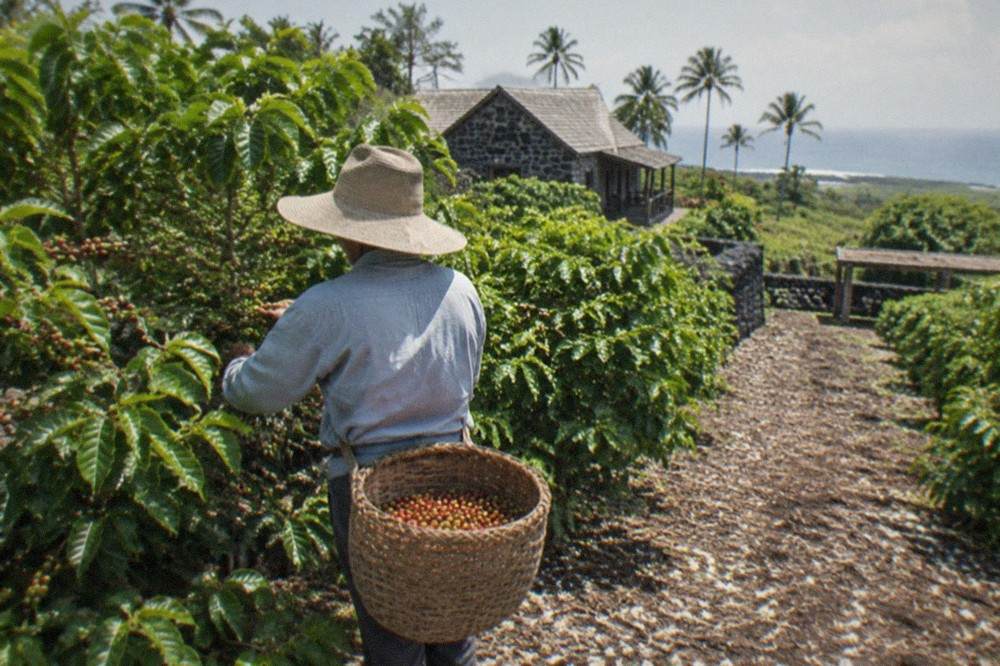
Kona coffee harvest season runs late August through January, with peak picking from October to December. The timing shifts with elevation: farms in lower South Kona start picking earlier in late August, while higher-elevation farms further up the slope start later and finish later. The bloom that starts the next crop comes mainly January through April, triggered by rain following dry spells.
The harvest window is not a Kona quirk, it is biology. Coffee cherries take roughly seven to nine months to develop from flower to ripe fruit, and Kona's pattern of dry winters and summer rains pushes flowering into early spring and ripening into fall. Because cherries on one branch ripen unevenly, pickers return to the same trees multiple times across the season, taking only the red fruit each pass and leaving the green for the next round.
Elevation matters more than most visitors expect. The Kona coffee belt runs roughly 30 miles north to south and only about 2 miles wide, climbing from around 500 feet to about 3,200 feet, with the core growing zone between 700 and 2,000 feet. A farm at the bottom of that range in South Kona can be picking in late August while a farm near the top is still weeks from its first round (see Best Kona Brands). If seeing active picking is the whole point of your trip, that spread gives you a long season but also means one farm's schedule cannot be generalized to the next.
The other thing worth knowing before you plan: harvest activity is not the only thing happening on a farm. Wet milling, sun-drying on decks and patios, and roasting all continue past the last picking round, so a January or February visit can still show you processing and drying even when the trees are picked clean. The belt's climate, roughly 60 or more inches of rain a year with sunny mornings and afternoon cloud, is exactly why the drying decks work, and it is the same weather pattern that spreads the harvest across half a year.
What Each Month Looks Like on a Kona Coffee Farm
August and September bring the first light picking rounds in lower South Kona, October through December are the peak months with crews, mills and drying decks all active, January closes the season with the final rounds, and February through April shift to pruning and bloom. May through August is green-fruit season, quiet but lush. Each month offers something different to see.
The table below is the practical version of the calendar, built from the season data and what farms actually report seeing. Use it to match your travel month to what will be in front of you.
| Month | What you see on the farm | What is running |
|---|---|---|
| August | First light picking rounds at lower South Kona farms, mostly green fruit elsewhere | Early picking, little milling yet |
| September | Picking spreads up the belt, more red cherries visible on trees | Picking ramps up, wet mill starts |
| October | Peak season begins, picking crews active most days | Picking, wet milling, drying decks filling |
| November | Peak picking plus festival week, farms at their busiest and most festive | Everything running, tasting rooms crowded |
| December | Final heavy rounds at higher elevations, decks fully loaded with drying coffee | Picking, milling, drying, early roasting of new crop |
| January | Season winds down, last rounds, lots of drying coffee on decks | Milling and drying dominate, roasting of new crop |
| February | Trees picked clean, pruning begins, first bloom possible | Pruning, maintenance, occasional bloom |
| March | Bloom season, white flowers in waves after rain | Bloom, pruning, farm maintenance |
| April | Late bloom waves, young green berries forming | Bloom finishing, green fruit setting |
| May to July | Dense green fruit, quiet farms, lush trees | Slow season, best farm access and smallest crowds |
Two practical notes on reading that table. First, bloom is not a single event: it comes in multiple peaks, mostly January through April, each triggered when rain follows a dry period, and each wave of white flowers lasts only a few days before the petals drop. Second, the off-season months are genuinely good for a farm visit if your priority is a relaxed walk and long conversations rather than machinery in motion. A May farm tour gets you green, healthy trees, empty tasting rooms and guides with time to talk.
If you want the full working farm at its busiest, November is the month that has everything: peak picking, every piece of processing equipment running, and the Kona Coffee Cultural Festival running across the belt from November 6 to 15, 2026. The trade-off is crowds, and the festival's most popular farm events fill up early.
For travelers weighing which bookable experience fits their month, here are three that cover different angles of the season.
The two-hour Organic Kona Coffee Farm and Mill Tour at Mountain Thunder is the longest farm walk on the roster and spends real time on the processing side, which is what you want during active harvest. The 90-minute Big Island Epic Coffee Tour at Ohana Ranch is the next longest option.a Ranch sits on the Hilo side in Mountain View, about 90 minutes from Kailua-Kona, so it belongs in an east-side itinerary rather than a Kona belt day. The "Sea Turtles and Coffee, 5 Hours" tour pairs a coffee morning with an afternoon at a turtle beach, and the listing often sells out.
Why October to December Is the Peak Picking Window
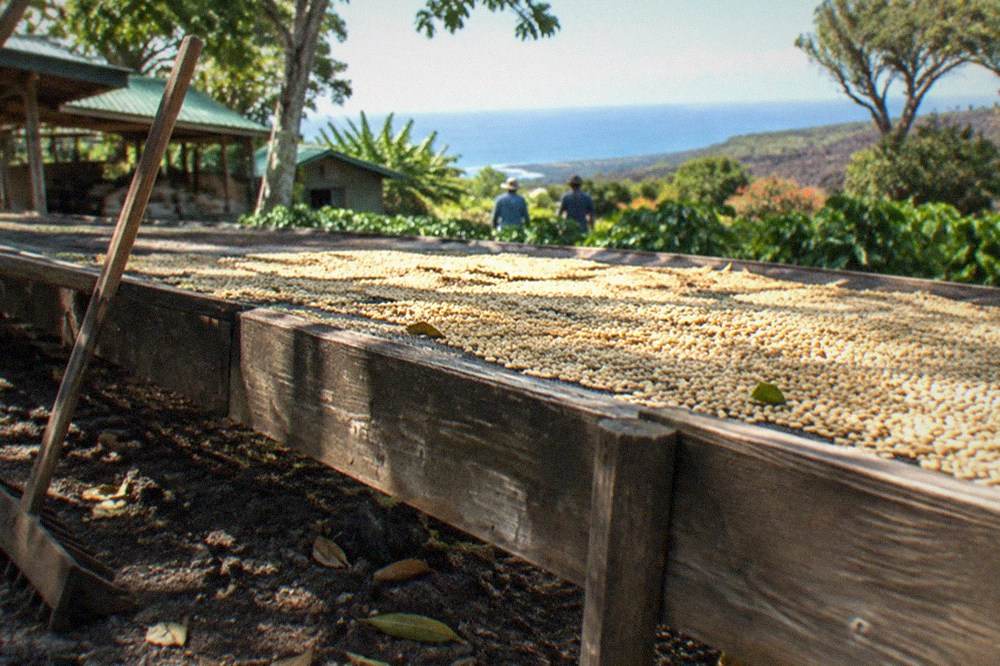
October through December is when all three stages of harvest run at once: hand-picking crews in the rows, wet mills pulping and fermenting the day's cherry, and drying decks loaded with coffee in the sun. That overlap only exists in the peak months, which is why farms, guides and the festival all concentrate activity then. A visit in this window shows the whole seed-to-cup process in motion.
Peak picking is the payoff period. Walk a farm in November and you can watch a picker move down a row selecting only the red cherries, then walk fifty yards and see that same fruit being pulped, then see the previous week's coffee raking on a drying deck. No other part of the year gives you the full chain on the same morning. The Kona belt's sunny mornings are what make the drying decks viable, and those mornings are most reliable exactly when the decks are fullest.
The crowds come with it. October through December is high season on the Kona coast generally, tasting rooms are busier, and the most popular farm experiences fill their slots earlier in the day. Bookable tours in this window are worth reserving ahead rather than planning on walk-up space, especially the small-group ones. The "Small-Group Farm Walk, Max 12" at Hala Tree caps at 12 travelers and the "Full-Hour Farm Walk, Max 20" at Heavenly Hawaiian caps at 20, both of which fill faster when the belt is at peak.
There is also a scheduling quirk worth exploiting: lower-elevation South Kona farms peak earlier, higher farms later. A two-week November trip can catch mid-season at one farm and absolute peak at another. Ask at the farm gate where they are in their picking rounds; farms are usually straightforward about it.
For a two-hour look at the working side of the season, the Mountain Thunder tour is the roster's deepest farm-and-mill walk.
The "Organic Farm and Mill, 2 Hours" tour runs from the Kaloko plantation campus about 10 minutes north of Kailua-Kona, at from $30, rated 4.8 from 27 reviews. Because it covers the mill as well as the rows, it holds up in any harvest month, including the January wind-down when picking is finishing but milling and drying continue.
What the 2025-26 Crop Numbers Mean for Your Visit
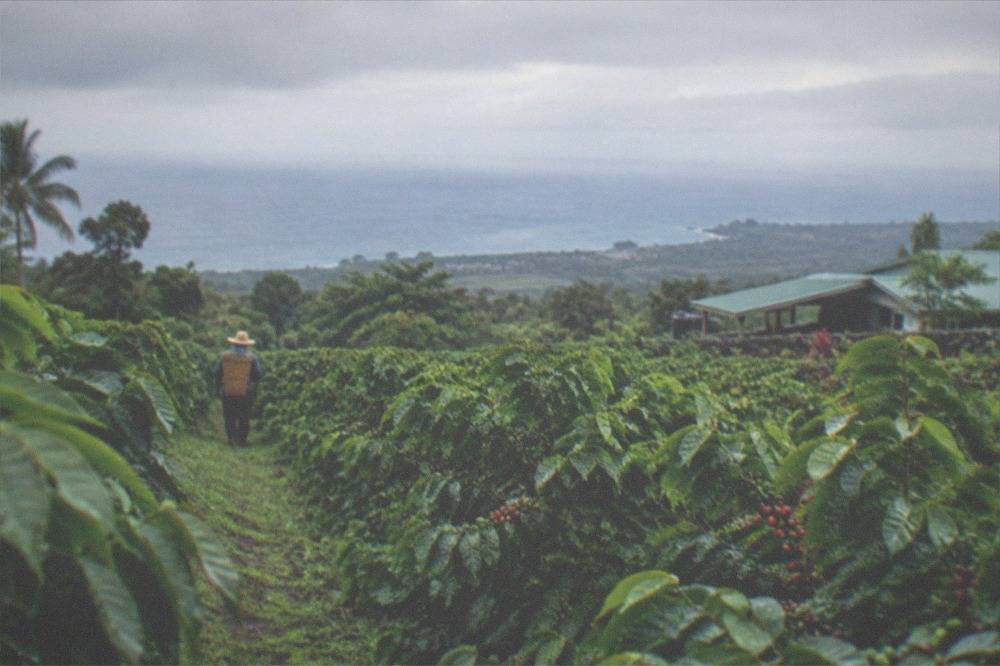
USDA's January 2026 forecast puts the 2025-26 Hawaii coffee crop at 17.8 million pounds of cherry, down 20 percent from the prior season. Bearing acreage fell to 6,500 acres and average yield dropped to 2,800 pounds per acre. For visitors the effect is subtle: smaller harvest, but the season's timing and what you see on a farm are unchanged.
The numbers behind the season, for context:
| Measure | 2025-26 season | Change |
|---|---|---|
| Hawaii coffee crop (cherry) | 17.8 million lb | Down 20 percent |
| Bearing acreage | 6,500 acres | Down 500 acres |
| Average yield | 2,800 lb cherry per acre | Down 810 lb |
| Record farm-gate cherry price | $2.51 per lb | Set in the 2023-24 season |
| Milled green Kona price range | About $25-35 per lb | Elevated on lower supply |
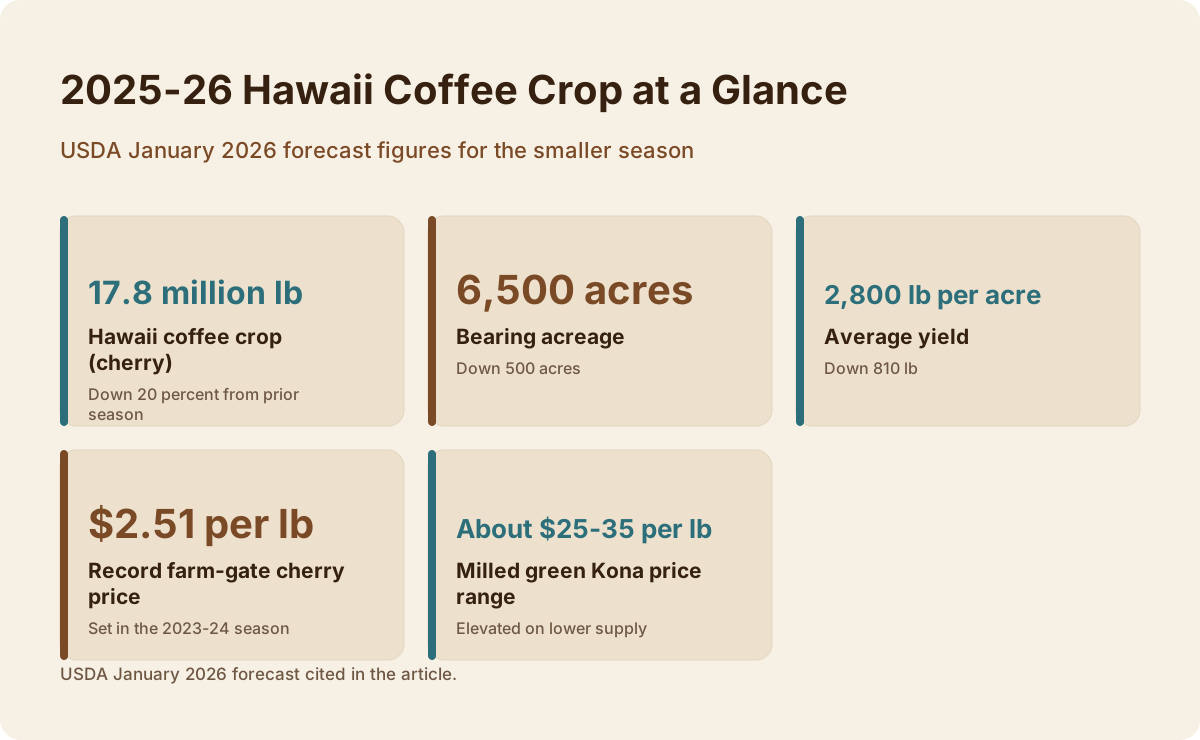
Two things follow from a smaller crop. First, prices: the record farm-gate price of $2.51 per pound of cherry was set in the 2023-24 season, and with 2025-26 supply down, green Kona prices have stayed elevated, with milled green coffee cited around $25 to $35 per pound for authentic Kona. If buying beans at the farm is part of your plan, expect farm-gate prices to reflect that, and treat the farm's own roastery as the place where the freshest crop shows up first. Second, availability: a smaller harvest does not shrink the tour calendar, but the special harvest events, like the festival's cupping competition season, are tied to the crop's quality, which farms guard closely in a lean year.
None of this changes the visitor math much. The harvest still runs late August through January, the peak is still October to December, and the farms still run the same tours. What a 20 percent smaller crop mainly means is that the beans you taste in November are a scarcer, more closely watched lot than usual, and the farmers you talk to will have a story about the year they just had.
Spring Bloom: Kona Coffee Flowers From January to April
After the last picking rounds, Kona coffee trees flower in waves, mainly January through April, when rain follows a dry period. Each bloom covers the trees in white flowers for a few days before the petals drop and green berries set. It is the prettiest and most fragrant time on a farm, and the least predictable.
Bloom is the part of the coffee calendar almost nobody plans for, which is a shame, because a full bloom on a Kona hillside is a genuine spectacle: white flowers packed along every branch, a sweet jasmine-like scent across the rows, and bees working the trees. The catch is timing. Bloom comes in multiple peaks rather than one event, each triggered by rain after a dry stretch, and each wave lasts only days. A farm can be in full flower on a Tuesday and bare-branched by the weekend.
If you are traveling February through April and want to catch a bloom, the practical move is to call farms a few days ahead and ask whether anything is flowering. Farms track it closely because the bloom sets the next crop. The free walk-in options make this easy to do on short notice: Greenwell Farms runs free guided tours daily with no reservation, every 30 minutes from 8:30am to 2:00pm, and Mountain Thunder runs free short guided walk-ins daily, so you can check conditions and simply show up. Rooster Farms offers free owner-led visits of the oldest certified organic Kona coffee farm, with an appointment recommended.
The bloom months are also pruning season, so a spring farm visit shows a different kind of work: trees being cut back, rows opened up, the farm being rebuilt for the next cycle. It is quieter, greener and, in a bloom window, briefly spectacular.
Why Festival Week in November Is the Celebratory Window
The Kona Coffee Cultural Festival runs November 6 to 15, 2026, its 55th annual edition, timed deliberately to peak harvest. It adds farm tours, a lantern parade, the Holualoa Coffee and Art Stroll, a cupping competition and a grand finale tasting on top of a belt already at its busiest. For a first visit, festival week is the most concentrated dose of Kona coffee culture available.
The festival is not a modern invention with a harvest theme attached. It has run for 55 consecutive years, and its placement in early November is a direct product of the harvest calendar: that is when the new crop is coming in, when the cupping competition has fresh coffee to judge, and when farms have both fruit on the trees and finished lots in the roastery. The schedule, published at the festival's official site, spans the whole belt, from the lantern parade at Kailua Pier to the coffee and art stroll in Holualoa.
Festival week changes the practical picture too. Farms that normally run simple walking tours add special events, tasting rooms run at capacity, and the roads between Kailua-Kona and Captain Cook, normally a 23 to 26 minute drive, run slower. Book everything earlier than you normally would, including the bookable tours, because the festival draws visitors who would otherwise never be on a coffee farm at all.
The one caution: festival week is peak-of-peak. If your priority is a quiet, unhurried farm conversation rather than celebration, the two weeks either side of the festival give you the same harvest activity with roughly half the crowds. Late September and early December are the connoisseur's workaround.
Which Tours Shine in Which Part of the Season
The right tour depends less on quality than on season: mill-heavy tours shine during active harvest, the chocolate combo runs only Tuesdays and Thursdays, the long day trips fit the shoulder months when farm activity is lighter, and the small-group walks are best booked well ahead in peak season. Match the format to your month and your side of the island.
| Tour | Length | From | Rating | When it shines |
|---|---|---|---|---|
| "Organic Farm and Mill, 2 Hours" (Mountain Thunder) | 2 hours | $30 | 4.8 from 27 reviews | Any harvest month; the mill runs past the picking season |
| "Farm-to-Cup Ranch Walk, 90 Minutes" (Ohana Ranch) | 1.5 hours | $49 | 4.5 from 46 reviews | East-side itineraries; about 90 minutes from Kailua-Kona |
| "Sea Turtles and Coffee, 5 Hours" (C Big Island) | 5 hours | $145 | 4.8 from 4 reviews | Peak season mornings; often sells out |
| "Chocolate Farm Combo, 3 Hours" (Kona Natural Soap) | 3 hours | $50 | 5.0 from 392 reviews | Tuesdays and Thursdays, 9am start |
| "Volcanoes and Waterfalls, 11 Hours" (Wasabi Tours) | 11 hours | $276 | 4.9 from 478 reviews | Shoulder months, when a full island day makes sense |
| "Small-Group Farm Walk, Max 12" (Hala Tree) | 1 hour | $10 | 4.9 from 80 reviews | Peak season, book ahead for the small cap |
A few of these deserve a closer look depending on when you land. The chocolate combo is the best reviewed tour on the roster, 5.0 from 392 reviews, but it runs on a fixed Tuesday and Thursday 9am schedule, so it constrains your week rather than flexing around it. The listing is currently booked 5+ times a day, which tells you the fixed slots fill.
The Wasabi circle-island day trip is the most reviewed tour on the roster, 4.9 from 478 reviews, with hotel pickup from 19 listed Big Island locations. It is an 11-hour day in which a coffee farm is one stop of many, so it fits best in the months when the farm itself is quieter and you want the volcano and waterfall stops to carry the day. The listing often sells out.
The "Cupping Workshop, Max 4" at Hala Tree is the roster's most intimate tasting format, capped at 4 participants per session at from $50, and as a new listing it has no reviews yet. A cupping workshop is a good rainy-day or off-season pick, since the coffee in the cups is roasted regardless of what the trees are doing.
Planning Your Visit Around the Harvest
Pick your month first, then your farm, then your tour. October to December for full harvest action, February to April for bloom, May to September for quiet farms and easy booking. The belt is compact, Kailua-Kona to Holualoa is about 8 minutes and to Captain Cook about 23 to 26 minutes, so you can base anywhere along the coast and reach any farm on the same morning.
Logistics on the belt are genuinely easy, which is why timing, not distance, is the real planning variable. The whole growing zone is a narrow strip, roughly 30 miles long and 2 miles wide, on the western slopes of Hualalai and Mauna Loa, and the driving times between the main farm towns are short. What varies is terrain: many farms have unpaved or gravel paths with mild slopes, so if mobility is a consideration, check with the farm directly before you go. Greenwell notes level pathways around its nursery and tasting areas, and Mountain Thunder's free tour is described as wheelchair friendly.
For the deeper background on the region itself, the guide to Kona Coffee Tours covers the site's full roster, and the pieces on the Kona coffee belt and its boundaries and on planning a visit to Kona coffee farms fill in the geography and the practical checklist. The master guide to Kona coffee farm tours, farm by farm compares every walkable farm on the belt. If a free tour is your budget's best friend, Greenwell's daily no-reservation tour, with times on the farm's own tour page, is the standard bearer.
One last seasonal note on buying. The 2024 Hawaii labeling law requires any coffee using a Hawaii origin name to state the percentage of Hawaii-grown coffee on the front label, and a "Kona blend" must be at least 10 percent Kona today, rising to 51 percent on July 1, 2027. Bags marked 100% Kona come from the North and South Kona districts only, and the Kona Coffee Council's voluntary 100% seal program is the mark to look for when you buy at the farm gate. Buying in harvest season means the current crop, which in a down year like 2025-26 is the scarce one.
However you time it, here are the three tours this site would shortlist for a harvest-season trip.
Common Questions About the Kona Coffee Harvest Season
When is Kona coffee harvest season?
The harvest runs late August through January, with peak picking October to December. Farms at lower elevations in South Kona start earlier, higher-elevation farms later, so the exact window varies by farm. Ask the farm where it is in its picking rounds when you book or arrive.
What month is best to see coffee being picked in Kona?
November is the single best month: picking crews are active, wet mills and drying decks are running, and the Kona Coffee Cultural Festival runs November 6 to 15, 2026. October and December are nearly as good, with slightly fewer crowds.
Can you see the coffee harvest outside of October to December?
Yes. September has early rounds at lower farms, January has final rounds plus active milling and drying, and February through April brings the bloom, when white flowers cover the trees for a few days at a time. May through August is the quiet green-fruit season.
When do Kona coffee trees bloom?
Mainly January through April, in multiple waves. Each bloom is triggered by rain following a dry period and lasts only a few days. Because timing is unpredictable, call farms a few days ahead during those months to ask whether anything is flowering.
Is the 2025-26 Kona coffee crop smaller?
Yes. USDA's January 2026 forecast puts the Hawaii coffee crop at 17.8 million pounds of cherry, down 20 percent from the prior season, with bearing acreage at 6,500 acres. The visitor experience is unchanged, but farm-gate bean prices reflect the tighter supply.
Do farm tours run during the harvest?
Yes, and harvest is the best time to take one. Tours run year-round, but October through December shows picking, milling and drying all at once. Book ahead in peak months, since small-group tours like the 12-person Hala Tree walk fill fastest.