Does Starbucks Use Kona Coffee? What Is Actually in the Cup
What is actually documented about Starbucks and Kona coffee, how the Hawaii labeling law separates a blend from 100% Kona, and why the coffee worth tasting is sold at a farm gate, not a chain counter.
Does Starbucks use Kona coffee?
No verified source documents Starbucks selling 100% Kona coffee as a standing menu item today, and the company makes no such claim itself. Kona's entire crop is small: the whole state of Hawaii forecast 17.8 million pounds of cherry for the 2025-26 season, down 20 percent from the year before. There is simply not enough Kona to fill a global chain's cups.
The honest version of this answer is that the question is really two questions. One is about Starbucks specifically, and the evidence there is thin: no current menu listing, no sourcing announcement, nothing in the verified record that supports a present-tense claim either way. Anyone who tells you a big chain "uses Kona" or "doesn't use Kona" as a flat fact is guessing, and this site won't print a guess. What this article can do is show you the numbers that make the question almost answer itself, and then show you where the real coffee actually gets poured.
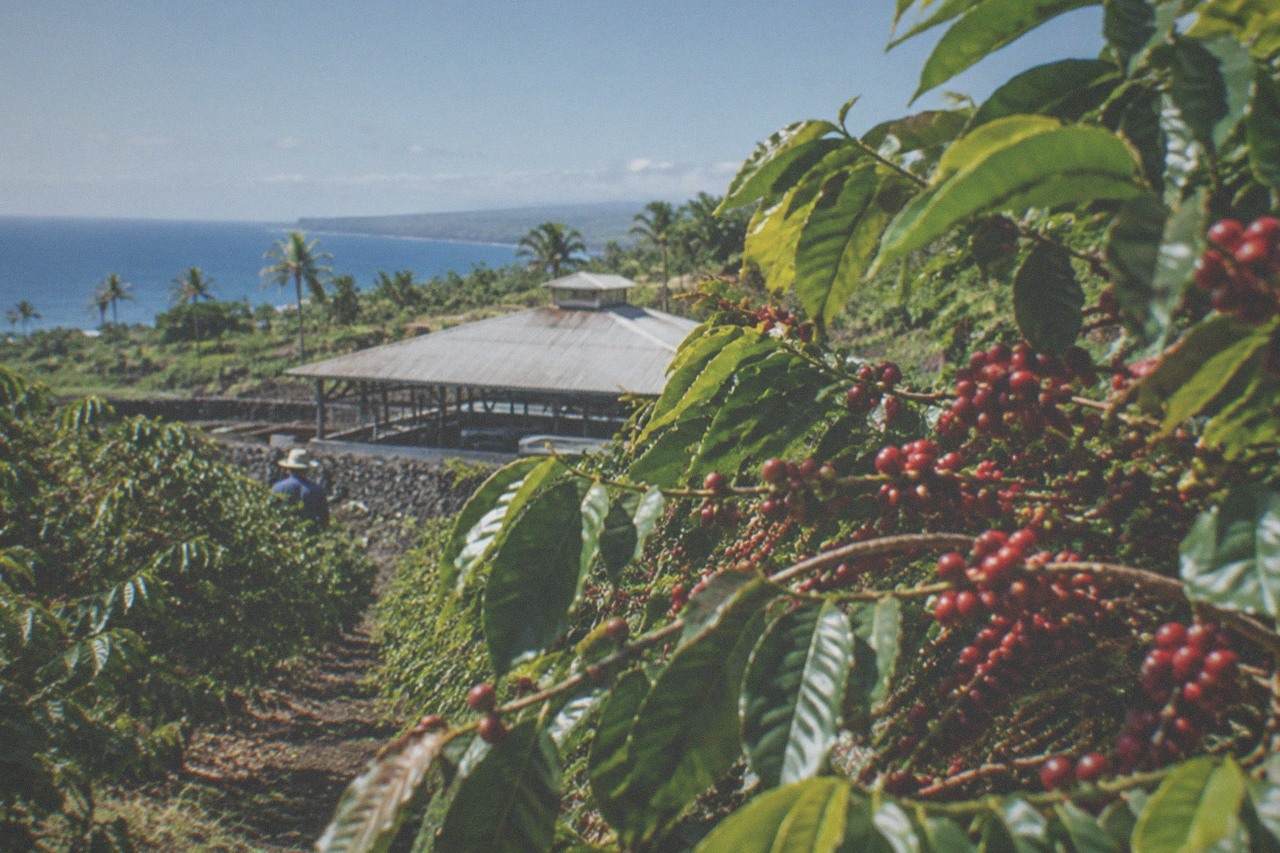
The other question is arithmetic. Kona coffee legally means beans grown only in the North and South Kona districts on the west side of Hawaii Island, a belt roughly 30 miles long and about 2 miles wide. The 2025-26 USDA forecast for all Hawaiian coffee, every district of every island combined, is 17.8 million pounds of cherry, and cherry loses most of its weight in processing: pulp, skin and water come off in the wet mill, and the parchment that remains shrinks again on the drying deck. A single global roaster moves more coffee than the entire state grows in a week of peak season. Real Kona is a boutique crop, and it always has been.
That scarcity is the whole reason the label matters so much. When a bag says "Kona" on a supermarket shelf or an airport rack, the words are doing more work than most readers realize, and Hawaii rewrote the rules on what those words are allowed to mean in 2024. The rest of this article unpacks that law, what a blend actually contains, why the reliable way to taste real Kona is to stand on the farm where it grew, and how to read any bag in any store in about ten seconds.
If the goal is tasting genuine 100% Kona rather than reading labels, the farm walks below are the direct route.
What does "Kona blend" actually mean under Hawaii law?
Under the labeling rules that took effect July 1, 2024, a "Kona blend" must currently contain at least 10 percent Kona beans, and the front label must state that percentage plus a "Contains:" list of every origin. On July 1, 2027 the minimum rises to 51 percent Kona. A bag that just says "Kona Coffee" with no percentage implies 100 percent Kona and is non-compliant for a blend.
That 10 percent floor surprises people. A bag sold today as a Kona blend can legally be 90 percent beans from anywhere: Latin America, Southeast Asia, other islands. The 2024 rules, passed as Act 211 and Act 198 amending Hawaii Revised Statutes 486-120.6, at least force the label to say so. The identity statement has to lead with the number, "10% Kona Coffee Blend" for example, followed by a "Contains:" line listing every origin and its percentage in descending order, in a font at least half the size of the identity statement. The full guidelines are published by the state's Measurement Standards Branch (Hawaii coffee labeling guidelines).
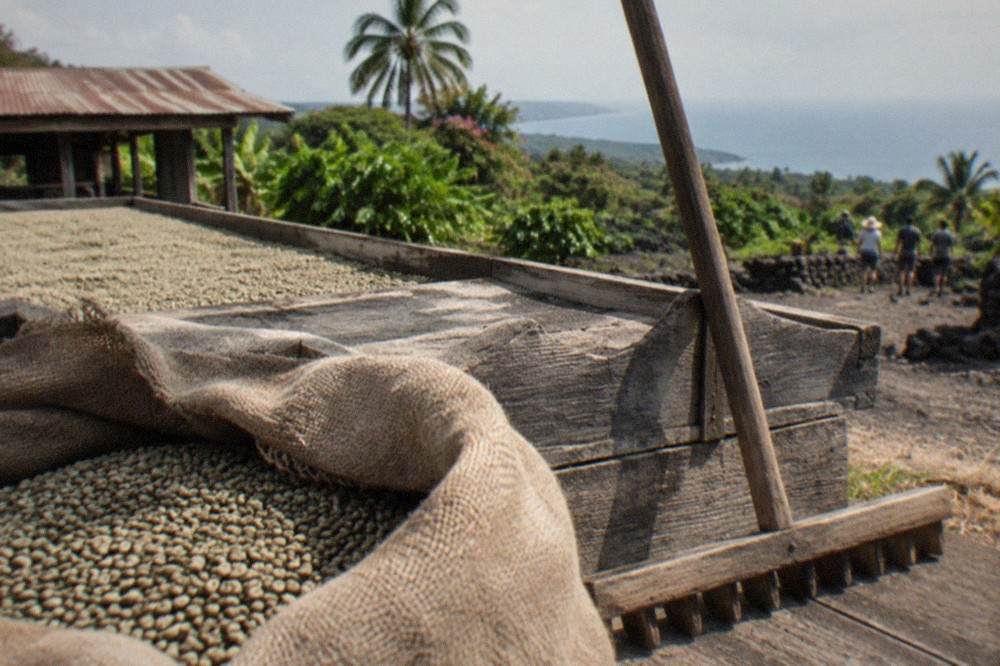
Before 2024, the law allowed a "Kona blend" with as little as 10 percent Kona beans and required no detailed front-label origin disclosure beyond the percentage. The new rules also tightened the top end: a claim of "100% Hawaiian" or "All Hawaiian" now requires the coffee to be 100 percent grown and processed in Hawaii, including decaffeination. That closes a loophole where processing steps done offshore could quietly break the chain of custody. For a region whose name is its main asset, these rules are economic protection, not paperwork.
The 2027 change is the one to watch. When the minimum jumps from 10 percent to 51 percent, a large share of the blends on shelves today either reformulate with five times more Kona or stop using the name. Industry reporting notes enforcement is largely complaint-driven, with some increased retail inspection but no new staffing, so the transition will be uneven at first. Growers pushed for the change precisely because a 10 percent blend borrows the Kona name while delivering almost none of the Kona character, and the price premium the name commands flows mostly to the blender, not the farmer.
For a shopper, the practical reading order on any bag is fixed by law:
| Label phrase | What it legally means | What to check |
|---|---|---|
| "100% Kona Coffee" | Beans grown only in North and South Kona districts, meeting Chapter 147 HRS grading | Optional Kona Coffee Council Seal of Approval |
| "10% Kona Coffee Blend" | At least 10% Kona beans today, 51% from July 1, 2027 | The "Contains:" list of all origins |
| "Kona Coffee" alone | Implies 100% Kona; non-compliant on a blend | Treat a blend without a percentage as a red flag |
| "100% Hawaiian" | 100% grown and processed in Hawaii, including decaffeination | Not the same as Kona at all |
The Kona Coffee Council, a nonprofit grower organization, runs the voluntary 100% Seal of Approval program that certifies authentic 100% Kona product with an audit trail back to the green miller (Kona Coffee Council). It is the closest thing the region has to a stamp a shopper can trust beyond the statute. A grower who opts into a voluntary audit is volunteering scrutiny, which tells you something about how they run the rest of the operation.
So where does a big chain fit? Any large roaster selling a "Kona blend" today is working with that same 10 percent floor, which means the cup tastes mostly like wherever the other 90 percent came from. That is not a scandal, it is what the word "blend" has meant in Hawaii for years, and it is the reason the price gap between a blend and 100% Kona is enormous. It is also the reason a chain has no commercial reason to buy real Kona in bulk: the flavor the brand promises comes from consistency at scale, and a 2-mile-wide growing district is the opposite of consistency at scale.
Wondering where to actually taste the difference while you're on the island? The small-group farm walks below pour the real thing.
Why real Kona coffee is a farm-gate product
Genuine 100% Kona mostly sells direct from the farms that grow it, at prices tied to a record farm-gate cherry price of $2.51 per pound in the 2023-24 season, with milled green Kona running roughly $25 to $35 per pound in 2025-26. Supply is small and falling, so the farms have no reason to sell into bulk channels where their coffee disappears into blends.
The economics explain the shelf. Hawaii's cherry forecast dropped 20 percent year over year to 17.8 million pounds, bearing acreage fell to 6,500 acres, and average yield slipped to 2,800 pounds per acre, down 810 pounds from the prior season. Less coffee, higher prices, and the growers who do the work can capture far more of that value selling their own bags at their own counters than selling green beans to a blender who needs them for 10 percent of a mix. The record cherry price of $2.51 per pound in 2023-24, up 16 cents, marked the moment the growers' bargaining power visibly shifted. Other pages covering the same trip are gathered on Kona Coffee Tours.
This is why the "is it cheaper in Hawaii" instinct cuts both ways. A 10 percent blend at an airport shop can cost less than a mainland grocery bag, because most of what's inside is commodity coffee. A 100% Kona bag bought at the farm costs more than almost anything on the mainland, because it is a scarce single-origin product sold at the source. The cheaper-in-Hawaii question gets its own full treatment elsewhere on this site.
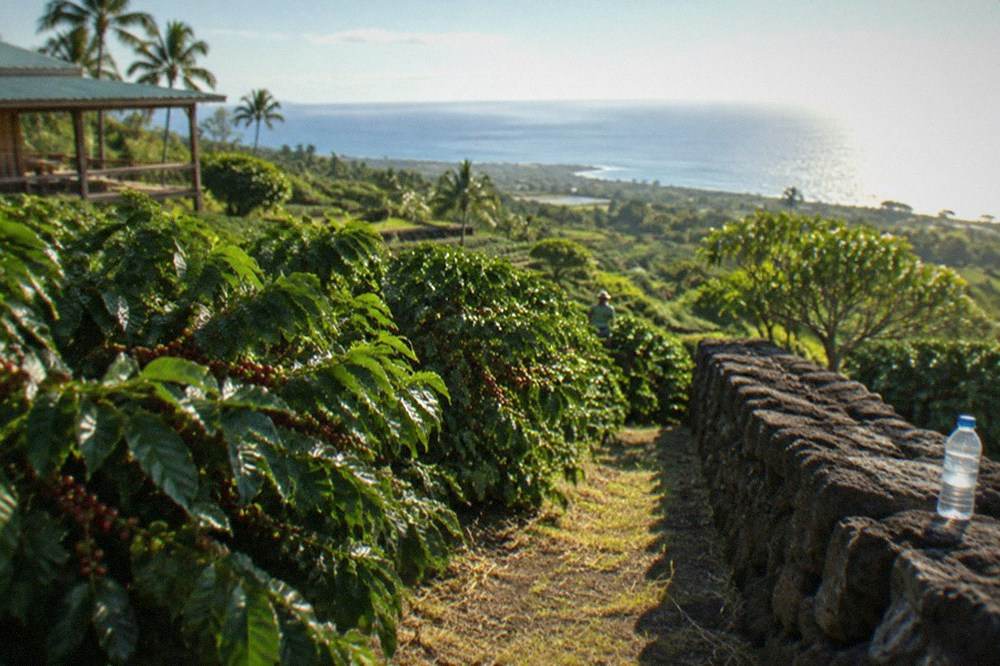
The belt itself is the constraint. It runs along the western slopes of Hualalai and Mauna Loa, roughly 500 to 3,200 feet in elevation with a core zone around 700 to 2,000 feet, about 30 miles north to south and only around 2 miles wide. Sunny mornings, afternoon cloud cover, more than 60 inches of rain a year, porous volcanic soil. The Kona coffee belt guide maps it in detail. That geography produces a crop that cannot scale, and the farms know it. Every acre of the belt is spoken for, mostly by families who have worked the same slopes for generations, and no amount of demand can conjure new land inside a legally defined two-mile strip.
The season compounds the scarcity. Harvest runs late August through January, with peak picking October through December, and every round of picking is done by hand because the cherries on a single branch ripen at different times. Bloom happens mainly January through April, triggered by rain following dry spells. A visitor in October sees rows full of pickers and drying decks full of parchment; a visitor in March sees flowering trees and pruning crews. The Kona coffee harvest season guide lays out what each month looks like on the ground.
| Product type | Typical price signal | Where it's sold |
|---|---|---|
| 10% Kona blend | Cheap to moderate; 90% other origins | Supermarkets, airport shops, chain-adjacent racks |
| 100% Kona, farm direct | Premium; tied to a small crop | Farm stores, farm websites, island retailers |
| Milled green Kona (wholesale) | Roughly $25-35 per pound in 2025-26 | Processors and roasters |
| Farm-gate cherry (grower level) | Record $2.51 per pound, 2023-24 season | Between growers and mills |
The farms that lean hardest into farm-gate sales also run the best tours, since a tasting room visitor who just walked the rows is the easiest customer a grower will ever have. Mountain Thunder's Organic Kona Coffee Farm and Mill Tour runs two hours, holds a 4.8 rating across 27 reviews, and is the longest farm walk on this roster., from $30, rated 4.8 from 27 reviews, and it shows the mill and roasting operation alongside the trees. It also runs free short walk-in tours direct, which is worth knowing before you pay for anything.
Which Kona farms can you visit instead of wondering about chains?
You can walk working Kona farms from $5 to $50 per person, from the near-free Heavenly Hawaiian sampler (from $5, fee credited to the gift shop) to the 3-hour chocolate and coffee combo at $50. Greenwell Farms runs a free guided tour daily with no reservation, every 30 minutes from 8:30am to 2:00pm. Every one of these pours 100% Kona at the source.
This is the practical answer to the Starbucks question. Instead of parsing a chain's blend percentages, stand in a Kona row and taste what the region actually produces. The Kona coffee farm tours guide covers the full roster; the short version is that the belt stacks several distinct experiences within about half an hour's drive of Kailua-Kona. Holualoa is roughly 8 minutes from town, Honalo about 14, and Captain Cook about 23 to 26, so a morning of farm visits barely registers on the odometer.
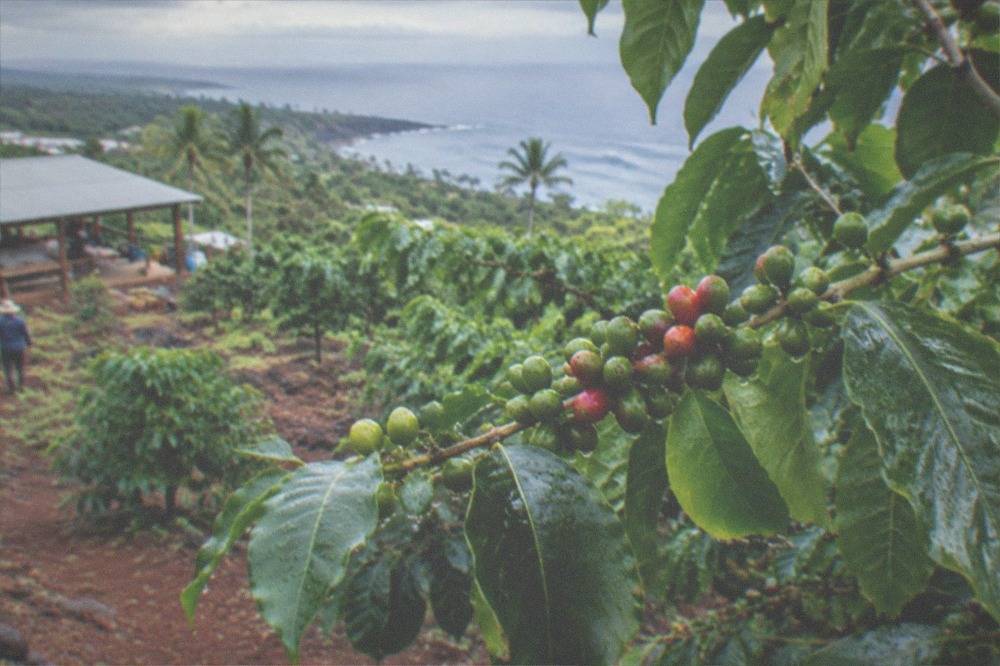
The visits break into three tiers. Greenwell Farms is the free anchor: a 45 to 60 minute guided walk, no reservation, arrive 10 to 15 minutes early, and the farm has been voted Hawaii's Best Farm Tour by Hawaii Magazine in 2021 and 2023 through 2026 (Greenwell Farms tour page). Its paid Deluxe private tour runs $59.95 per person with a two-person minimum and reservations, direct with the farm. The free tour ends with a tasting, which is the moment the blend question resolves itself for most visitors.
The bookable farm walks fill the middle. Hala Tree Coffee's "Small-Group Farm Walk, Max 12" is the highest rated walk on the roster, 4.9 from 80 reviews, from $10, an hour from the farm gate at mile marker 109 in Captain Cook. Heavenly Hawaiian sells a "Short Sampler Walk, Max 25" from $5 with the fee credited to the gift shop, and a "Full-Hour Farm Walk, Max 20" from $33 that the listing notes was booked 4 times today. The chocolate combo, "Chocolate Farm Combo, 3 Hours" from Kona Natural Soap, is the best reviewed tour on the entire roster at 5.0 from 392 reviews, from $50, running Tuesdays and Thursdays at 9am with a cap of 30 travelers.
| Farm visit | Format | Price | Rating |
|---|---|---|---|
| Greenwell Farms free tour | Guided, 45-60 min, no reservation | Free | Hawaii's Best Farm Tour, 2021 and 2023-2026 |
| Hala Tree "Small-Group Farm Walk, Max 12" | Guided, 1 hour, max 12 | From $10 | 4.9 from 80 reviews |
| Heavenly Hawaiian "Short Sampler Walk, Max 25" | Guided, 30 min to 1 hour | From $5, credited to gift shop | 5.0 from 188 reviews |
| Mountain Thunder "Organic Farm and Mill, 2 Hours" | Guided, 2 hours, farm plus mill | From $30 | 4.8 from 27 reviews |
| Kona Natural Soap "Chocolate Farm Combo, 3 Hours" | Guided, 3 hours, coffee plus chocolate | From $50 | 5.0 from 392 reviews |
One honesty note that matters on this site: Ohana Ranch's "Farm-to-Cup Ranch Walk, 90 Minutes" sits on the Hilo side in Mountain View, about 90 minutes from Kailua-Kona. It is a real coffee farm tour, from $49, rated 4.5 from 46 reviews, but it is not a Kona belt farm and no article here will call it one. If your trip stays on the Kona side, the table above is the honest shortlist.
Timing the visit matters too. October and November are the peak months to watch picking, wet milling and sun-drying in action, and the Kona Coffee Cultural Festival 2026 runs November 6 to 15, with a cupping competition, farm tours and the Holualoa Coffee and Art Stroll packed into ten days (Kona Coffee Cultural Festival). Late August and September bring lighter crowds and the first picking rounds. Any month between August and March gives you a working farm rather than a pretty backdrop.
The Hala Tree walk deserves its spot as this article's featured pick for one more reason: the farm also runs a cupping workshop capped at 4 participants per session, from $50, a new listing with no reviews yet. A cupping table is where the blend-versus-100% question stops being abstract. You taste two coffees side by side and the 90 percent difference stops being a number.
How do you read a Kona label in a store?
Read the front label in this order: the percentage in the identity statement, the "Contains:" origin list, and any seal. "100% Kona Coffee" means North and South Kona districts only. A percentage below 100 means a blend, and from July 1, 2027 that percentage must be at least 51 for anything calling itself Kona. Ignore everything on the back panel until the front panel checks out.
The front label is doing the legal work. The identity statement must lead with the percent, the "Contains:" line must list every origin in descending order, and the type must be at least half the size of the identity statement. If a bag's front says "Kona" with no number at all, that is either 100% Kona or a label written before anyone audited it, and the price usually tells you which. The law also covers instant, ready-to-drink, single-serve and bulk coffee, not just whole-bean bags, so the same reading order applies to pods and cans.
Price is the second filter. With milled green Kona at roughly $25 to $35 per pound before roasting, plus roasting shrink, packaging and margin, a retail bag of genuine 100% Kona cannot sit at commodity prices. A "Kona blend" at commodity prices is exactly what the label says: mostly something else, which is fine if that's what you want and you know it. The trap is the middle shelf, where blends borrow the region's photography and typography while containing a tenth of the product, and the 2027 rule change will thin that shelf out considerably.
The seal is the third check. The Kona Coffee Council's voluntary 100% Seal of Approval includes a green miller's audit trail, which is a stronger paper trail than the statute requires. Growers who opt into a voluntary audit program are making a statement about their own supply chain. The best Kona coffee brands guide names the producers worth seeking out once you can read the label.
None of this requires a chain to behave differently. It requires the shopper to read one line on a front label. The farms make the same test easier: you watch the cherries come off the tree, and nothing on the walk is a percentage. That is the quiet argument for Kona coffee tours over any counter anywhere: the cup introduces itself.
If a farm visit is on your itinerary, these three are the strongest picks for a first Kona tasting.
Common Questions About Starbucks and Kona Coffee
Does Starbucks use Kona coffee?
No verified source documents Starbucks selling 100% Kona coffee as a standing menu item, and the company makes no such claim. Kona is a tiny crop, about 17.8 million pounds of cherry forecast for all of Hawaii in 2025-26, far too small to supply a global chain. Any blend sold under a Kona name today can legally contain as little as 10 percent Kona.
What is a Kona blend?
A coffee that contains at least 10 percent Kona beans, with the percentage and a "Contains:" origin list required on the front label under the 2024 Hawaii labeling rules. The minimum rises to 51 percent Kona on July 1, 2027. A Kona blend is mostly other coffee by weight today.
What does 100% Kona Coffee mean?
Beans grown only in the North and South Kona districts on Hawaii Island, meeting Hawaii's green coffee grading standards under Chapter 147 HRS. The Kona Coffee Council offers a voluntary 100% Seal of Approval with an audit trail back to the green miller.
Why is 100% Kona coffee so expensive?
The belt is roughly 30 miles long and about 2 miles wide, supply fell 20 percent in the 2025-26 season, and the farm-gate cherry price hit a record $2.51 per pound in 2023-24. Milled green Kona runs about $25 to $35 per pound before roasting. Scarcity plus hand-picking plus a small legal growing area sets the price.
Can I taste real Kona coffee on a farm tour?
Yes. Greenwell Farms runs a free guided tour daily with no reservation, Hala Tree's small-group walk is from $10, and Heavenly Hawaiian's sampler is from $5 with the fee credited to the gift shop. Every working farm tour on the belt pours 100% Kona at the source.
When does the Kona blend rule change?
On July 1, 2027, the minimum Kona content for a blend using the Kona name rises from 10 percent to 51 percent. Enforcement is largely complaint-driven, so expect an uneven transition on shelves at first.