Is It Cheaper to Buy Kona Coffee in Hawaii?
A price-by-price answer to whether Kona coffee is cheaper in Hawaii, covering farm-gate prices, mainland retail markups, the blend labeling trap, and shipping versus suitcase.
Is It Cheaper to Buy Kona Coffee in Hawaii?
Yes, buying 100% Kona coffee in Hawaii is usually cheaper, often by a wide margin, because farm shops price close to the local wholesale reality of roughly $25 to $35 per pound for authentic milled Kona, while mainland retail adds shipping, logistics, and markup on top. The one catch is blends, where a low price can mean as little as 10 percent actual Kona.
The honest answer starts with a number that never appears on a souvenir bag. Hawaii's farm-gate price for coffee cherry hit a record $2.51 per pound in the 2023-24 season, and 2025-26 green and parchment prices have stayed elevated because supply dropped: the USDA forecast for the season, released in January 2026, puts Hawaii production at 17.8 million pounds of cherry, down 20 percent from the prior season. That squeeze flows all the way to the shelf. When the raw material costs more, the gap between buying at the source and buying at home widens, because every middle step between the farm and your kitchen is priced on top of a higher base.
Farm shops on the Kona belt sell close to the source. There is no distributor margin, no mainland warehouse, no retailer cut. A bag bought at the farm where it was grown is about as short a supply chain as coffee gets. Mainland retail, by contrast, can add several layers before the price tag appears, and each layer is a percentage of the last one, which compounds fast on a premium product.
That is the arithmetic case. There is also a quality case that has nothing to do with price per pound: roasted coffee is at its best within weeks of roasting, and a bag bought at the farm is often roasted the same week you taste it. A bag that crossed an ocean and sat in a distribution chain cannot claim that, at any price.
If you want to taste before you commit your suitcase space, these are the three farm experiences on the Kona belt most worth booking:
All three end at a tasting counter, which matters here: the cheapest coffee is the coffee you actually like, and the only way to know is to taste it where it was grown.
What Does 100% Kona Coffee Cost At The Farm Versus On The Mainland?
Farm-gate roasted 100% Kona typically lands in the $25 to $50 per bag range depending on farm and size, tracking the $25 to $35 per pound milled-green wholesale reality. Mainland retail for genuine 100% Kona commonly runs well above that once shipping and markup stack up. The gap is real but not uniform: small-batch estate bags cost similar money anywhere, while mainland "Kona" products at suspiciously low prices are usually blends, not the same product at all.
The planning ranges below are drawn from the verified farm and market data, not from any single operator's promise. Treat them as what to expect, then check the room.
| Where you buy | Typical price signal | What you get | The catch |
|---|---|---|---|
| Farm shop or tasting room on the belt | Closest to the $25-35/lb green wholesale base | Fresh roast, often same-week, 100% Kona if labeled so | Limited stock and hours |
| Kona-area retail and airport shops | Moderate markup over farm-gate | Genuine 100% Kona from known farms | Selection skews gift-oriented |
| Mainland specialty retail | Highest shelf prices for 100% Kona | Verified single-origin, sometimes estate-named | Age of roast is unknowable |
| Mainland grocery "Kona blend" | Lowest prices on any Kona-labeled bag | As little as 10% Kona beans today | You are mostly paying for non-Kona coffee |
One concrete example of how the farm-side price ladder works: Heavenly Hawaiian's bookable short sampler walk is listed from $5, and the fee is credited to the farm gift shop, so the tasting effectively pays for itself if you buy a bag. The fuller hour-long version of the same farm walk is listed from $33. Direct booking with the farm runs about $25 to $27 per adult for the hourly tour, which is a different channel and a different price. The point is not which number is lowest; it is that on the belt, the tasting and the purchase are bundled in a way no mainland transaction can match.
The same logic applies to the free tier. Greenwell Farms runs a complimentary guided tour daily, every 30 minutes from 8:30am to 2:00pm, no reservation needed, ending in a tasting, per the farm's own tour page. You can taste several roasts for nothing and then decide whether the bag is worth carrying home. That is a savings no mainland store offers, and it is the strongest version of the taste-first argument, which the free Kona coffee farm tours guide covers farm by farm.
Why The Labeling Law Makes "Cheaper" A Trap
Since July 1, 2024, Hawaii law requires any coffee using a Hawaii geographic name to state the percentage of Hawaii-grown coffee on the front label, with a "Contains:" list of every origin. A "Kona blend" can legally contain as little as 10 percent Kona beans today, rising to 51 percent on July 1, 2027. A cheap Kona-labeled bag on the mainland is often mostly non-Kona coffee, so the price comparison is fake.
This is the single most important thing to understand before shopping for Kona coffee anywhere, and it is why "cheaper in Hawaii" needs a qualifier. The 2024 rules, detailed in the state's labeling guidelines, exist because the old law let a bag say "Kona blend" with a token amount of Kona inside. The new front-label disclosure makes the percentage visible, but it does not change what is in the bag until the 51 percent minimum arrives in mid-2027.
| Label claim | Legal meaning today | What changes July 1, 2027 |
|---|---|---|
| "100% Kona Coffee" | Beans grown only in North and South Kona districts, graded under Chapter 147 HRS | Unchanged; still the only claim that means all Kona |
| "10% Kona Coffee Blend" | At least 10% Kona beans, origins listed on front | Minimum rises to 51% Kona |
| "Kona Coffee" on a blend | Non-compliant; blends must lead with the percentage | Same rule, same fix |
| "100% Hawaiian" | 100% grown and processed in Hawaii, not necessarily Kona | Unchanged |
The trap cuts in both directions. On the mainland, a low price on a Kona-labeled bag usually signals a blend, and the label now has to tell you so. In Hawaii, the same blends sit on shelves right next to the genuine article, sometimes at prices that look like a bargain next to the estate bags. Read the percentage before you read the price. The voluntary 100% Kona Seal of Approval administered by the Kona Coffee Council is the cleanest shortcut: a seal means the grower opted into an audit trail for a genuine 100% product.
There is a budget-honest way to use blends: if you like a mellow cup and do not want to pay estate prices, a disclosed 10 percent blend bought in Hawaii is still cheaper than the same blend bought on the mainland. Just do not tell yourself you bought Kona coffee, because you mostly did not.
If tasting your way to a purchase sounds better than reading labels, this is the farm walk most worth the drive:
Shipping Versus Suitcase: What It Really Costs To Get Beans Home
Carrying bags in your luggage is almost always cheaper than shipping, because roasted coffee is dense, heavy, and expensive per pound to mail. A suitcase full of coffee adds zero marginal cost if you have the weight allowance; shipping adds a per-pound charge that can approach the price of the coffee itself. The real limits are airline weight rules and how much you trust your own packing, not the postal rates.
The arithmetic is blunt. Coffee is one of the least efficient things to ship per dollar of value: it is heavy for its price, it needs protection from moisture and odor, and Hawaii-to-mainland rates are not subsidized. Buy three one-pound bags at a farm and mail them, and the shipping can add a meaningful fraction of the coffee's cost. Put the same three bags in a suitcase you were bringing home anyway, and the marginal cost is zero.
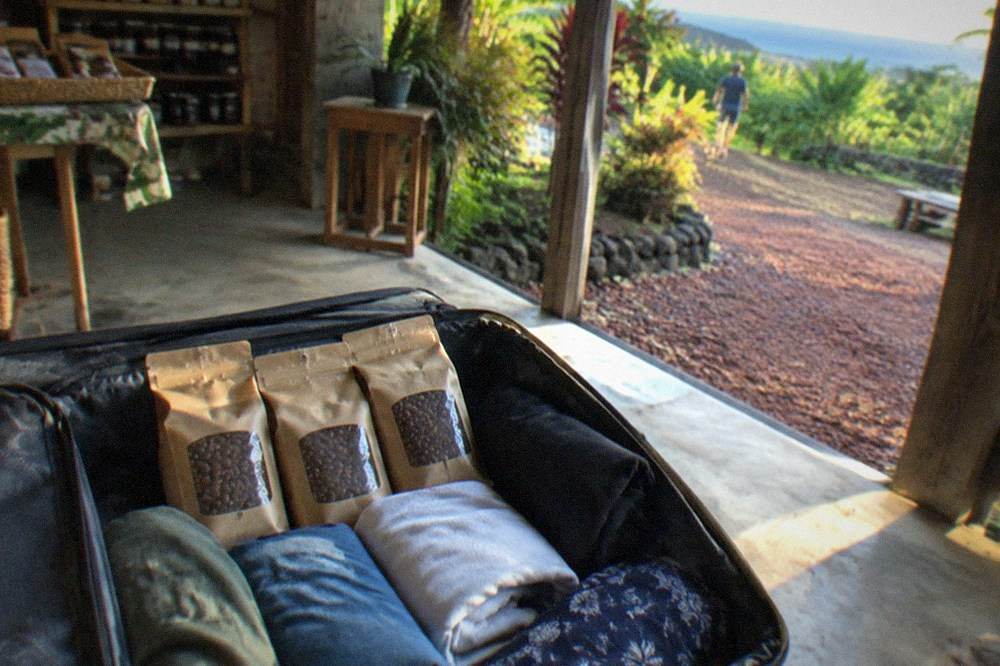
The practical planning range: check your airline's checked-bag weight limit before you shop, since coffee is dense enough to push a bag over the threshold quickly, and keep whole-bean bags sealed in their original packaging, which is built to protect the roast. Vacuum-sealed farm packaging survives a flight fine. Ground coffee loses aroma faster, so buy whole bean unless you have no grinder at home.
One more wrinkle works in the suitcase's favor: many farm shops, and the Kona Coffee Cultural Festival's own events, sell bags specifically sized for travel. The 2026 festival runs November 6 to 15 and includes a Grand Finale tasting event and the Cupping Competition Awards, per the festival's schedule, and the farm tours and tastings around it double as a chance to buy from growers directly.
Where The Farm Shops And Tasting Rooms Actually Charge
On the belt itself, the tasting rooms cluster along Mamalahoa Highway from Holualoa south to Captain Cook, roughly 8 to 26 minutes' drive from Kailua-Kona depending on how far south you go. Each farm sells its own roast at its own counter, so prices vary farm to farm but all sit close to the island's wholesale reality. The bookable tours that end at those counters run from $5 to $50.
The geography matters for a shopping trip. Holualoa is about 8 minutes from Kailua-Kona, Honalo about 14, and Captain Cook about 23 to 26, so one morning can cover two or three farm counters without much driving.n this site's roster give a sense of the spread: the "Small-Group Farm Walk, Max 12" at Hala Tree is listed from $10 and holds a 4.9 rating from 80 reviews, the highest rated farm walk on the roster. The "Chocolate Farm Combo, 3 Hours" at Kona Natural Soap is listed from $50 with a 5.0 rating from 392 reviews, the best reviewed tour on the entire roster, and it runs Tuesdays and Thursdays at 9am with coffee, chocolate, and gift stops built in.
The "Short Sampler Walk, Max 25" at Heavenly Hawaiian is listed from $5 with the fee credited to the farm gift shop, and the "Full-Hour Farm Walk, Max 20" version from $33 carries a 4.9 from 265 reviews. Those are bookable listings; direct booking with the farm is a separate channel at its own price, around $25 to $27 per adult. Either way, the tasting room at the end is where the buying decision happens, and the farm-gate price you pay there is the one mainland retail has to beat.
For a fuller comparison of every walk on the belt, including the free ones, the Kona coffee farm tours master guide lays out all fourteen bookable options side by side.
The Taste-First Case For Buying Where You Toured
The strongest argument for buying in Hawaii is not the price gap, it is that a farm purchase is the only one where you taste the exact lot before paying. Coffee varies by elevation, roast date, and processing, and a tasting room pour comes from the same batch as the bag on the shelf. A mainland purchase is a bet on a label; a farm purchase is a decision you already made with your own palate.
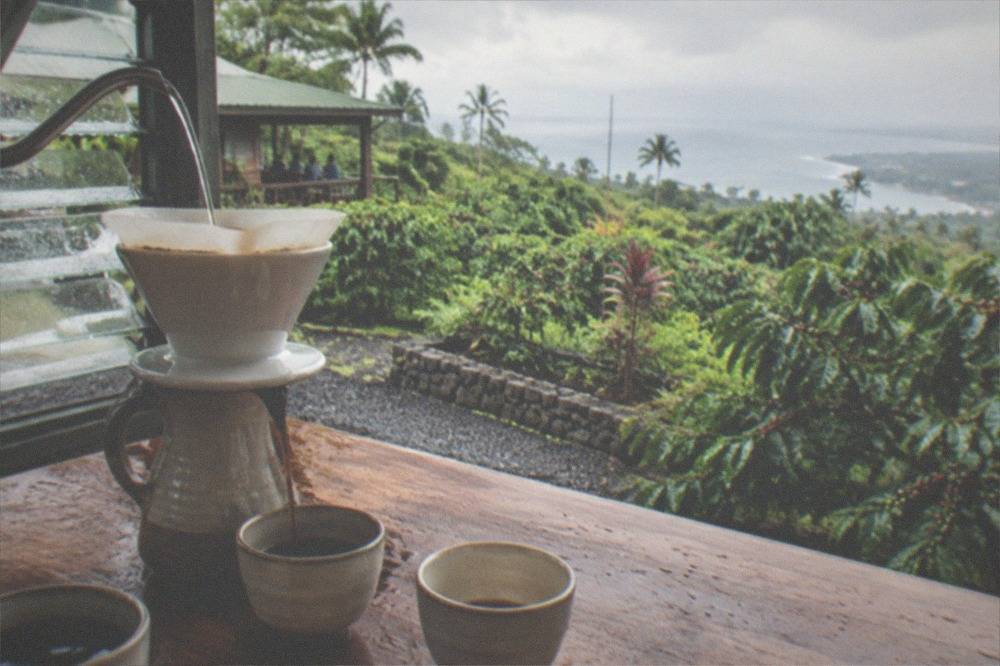
This reframes the whole question. If a $40 estate bag tastes better to you than the $28 one next to it, the $28 bag is not cheaper, it is wasted money. Tastings exist to prevent exactly that purchase. Every farm walk on the belt ends at a counter where the pour in your hand and the bag on the shelf share a roast date, and several of the best counters cost nothing to reach: Greenwell's free daily tour ends in a tasting, Mountain Thunder's free walk-in tour includes sampling, and Bay View Farm's free guided walk ends with a complimentary tasting of multiple roasts.
The taste-first argument also explains why the answer to this article's question is not a simple yes. Someone who buys a bag at random in an airport shop saves nothing over mainland retail and learns nothing about what they bought. Someone who books a walk, tastes three roasts, and buys the one they actually liked has spent a few dollars on the tasting and made the only purchase that is guaranteed not to be regretted. The Kona coffee tasting guide goes deeper on which counters pour what.
For readers deciding between brands rather than farms, the best Kona coffee brands guide covers the labels worth mailing home.
How To Read A Kona Label Before You Pay
Look for three things in order: the percentage statement on the front, the "Contains:" origin list, and the roast or lot date. "100% Kona Coffee" means North and South Kona districts only, and the Kona Coffee Council's seal confirms it. Anything with a percentage below 100 is a blend, and the percentage tells you how much of your money bought actual Kona beans.
The 2024 law made this easier than it used to be, but you still have to do the reading. A compliant front label leads with the percentage for blends, so "10% Kona Coffee Blend" is the honest, legal name of what used to hide behind a decorative "Kona" banner. The "Contains:" line underneath lists every origin in descending order, which tells you what the other 90 percent is and where it came from.
For 100% bags, the useful details move to the back: roast date, farm or mill name, and whether the grower carries the Council's seal, which includes a voluntary green miller's audit trail. Freshness is the one advantage no label can fake and no mainland shelf can match, so a legible recent roast date on a farm-shop bag is worth more than any discount elsewhere.
Common Questions About Buying Kona Coffee In Hawaii
Is it cheaper to buy Kona coffee in Hawaii?
Usually yes, for 100% Kona bought at or near the farm, because farm-gate prices sit close to the island's wholesale reality of roughly $25 to $35 per pound milled green, while mainland retail stacks shipping and markup on top. The exception is the blend shelf: a cheap Kona-labeled bag can be as little as 10 percent actual Kona beans, which is a different product, not a cheaper one.
How much does real 100% Kona coffee cost?
Expect farm-shop roasted 100% Kona to track the wholesale base, commonly landing in the $25 to $50 per bag range depending on farm and bag size, with estate and small-lot roasts at the higher end. Mainland specialty retail for genuine 100% Kona typically costs more for the same beans, and the roast will be older by the time you open it.
What does "Kona blend" actually mean?
Under Hawaii law effective July 1, 2024, a Kona blend must state its percentage of Kona beans on the front label, and today that minimum is 10 percent, rising to 51 percent on July 1, 2027. A compliant bag says "10% Kona Coffee Blend" and lists all its origins in a "Contains:" line. It is legal, but it is mostly non-Kona coffee.
Should I ship Kona coffee home or carry it in my suitcase?
Carry it. Roasted coffee is dense and heavy, so shipping can add a meaningful fraction of the coffee's own price, while a suitcase you were checking anyway carries it for free. Check your airline's weight limit before shopping, since coffee adds up quickly, and keep bags sealed in their original packaging.
Where is the best place to buy Kona coffee on the Big Island?
At the farm you toured, because the tasting room pours the same lot as the bag on the shelf, so you buy with your own palate instead of a label. The tasting rooms cluster along Mamalahoa Highway from Holualoa to Captain Cook, roughly 8 to 26 minutes from Kailua-Kona, and several farms, including Greenwell, pour free tastings with no purchase required.
Is Kona coffee from the airport a good deal?
It can be for genuine 100% Kona bags from named farms, though selection skews toward gift packaging and prices sit above farm-gate. Read the percentage statement first: airport shelves carry blends alongside the real thing, and a low price on a Kona-labeled bag usually means 10 percent Kona beans, not a bargain on the genuine article.
If the tasting-first route is the one for you, these are the three farm experiences that end at a buying counter:
The short version of all of this: yes, Kona Coffee Tours readers will usually pay less per pound of genuine 100% Kona by buying it on the island, at the farm, in their own suitcase. The price gap is real, the freshness gap is bigger, and the only trap on the shelf is a percentage you can now read for yourself.