What Makes Kona Coffee Special: The Belt, The Cherry, The Cup
A plain-language explainer of why Kona coffee costs what it costs: the two-mile-wide growing belt, hand-picking and sun-drying, the taste profile, and the Hawaii labeling law that protects the name.
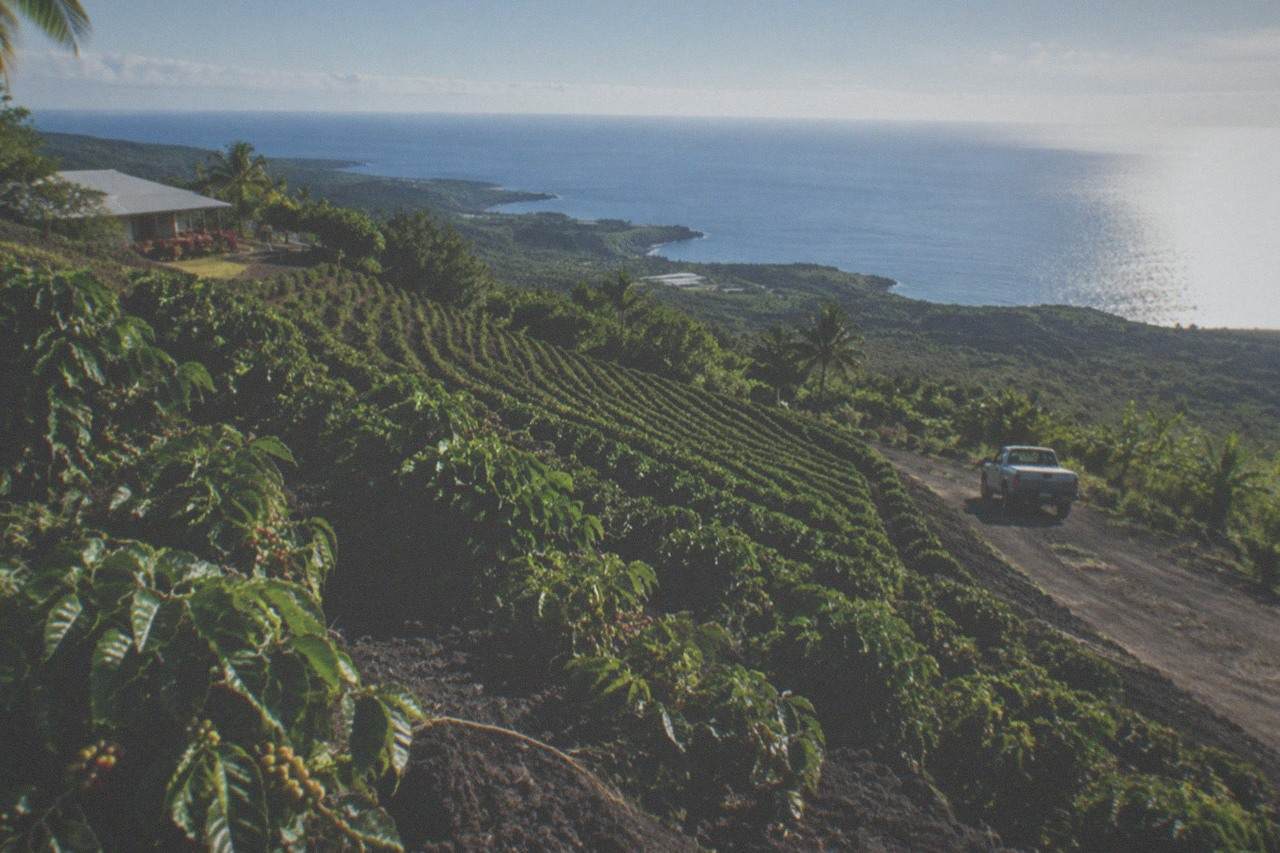
Kona coffee sells for some of the highest farm-gate prices in the world, and the reasons are physical, legal and historical at the same time. The coffee grows in a legally defined appellation on the western slopes of Hualalai and Mauna Loa, roughly 30 miles long and about two miles wide, where the climate does something the rest of the island cannot replicate. Every bean that carries the name is picked by hand, and a state labeling law decides who is allowed to use that name at all. This page walks through each of those pieces in plain language, for someone who has never bought a bag.
what is so special about kona coffee?
Kona coffee is special because it grows in a two-mile-wide appellation with a near-perfect coffee climate, is hand-picked in multiple rounds across a long harvest, is sun-dried and carefully milled, and carries a taste profile of low acidity and smooth sweetness that the state of Hawaii legally protects with strict labeling rules. No single one of those facts does the work alone. Remove the climate and you get ordinary coffee. Remove the hand-picking and the cup quality drops. Remove the law and the name gets diluted onto supermarket shelves. The rest of this page takes each piece apart, so that the next bag you buy, or the next farm tour you take, makes sense on its own terms.
The short version is this. Coffee needs elevation, mild temperatures, sun, rain and good drainage, and the Kona belt supplies all five in an unusual combination: sunny mornings, cloudy afternoons, roughly 60 inches of rain a year, and porous volcanic soil that sheds water fast. The harvest runs from late August through January, and because the cherry ripens unevenly, pickers walk the same rows again and again, taking only the ripe fruit each pass. That labor is the single biggest reason for the price.
It also helps to know what Kona coffee is not. It is not a variety unique to the island; most Kona farms grow Kona Typica, an old arabica lineage grown in many countries. It is not grown on a single giant estate; the belt is stitched from hundreds of small family farms, many of them five to ten acres, which is why farm-to-farm differences show up in the cup. And it is not simply "Hawaiian coffee": Hawaii grows coffee on several islands, but only the North and South Kona districts can legally use the Kona name. What makes the coffee special is where and how those particular trees are grown, not some secret bean.
If you want to see the whole chain rather than read about it, those three tours cover the range: a two-hour farm-and-mill walk, a small-group farm visit capped at 12 travelers, and a three-hour coffee-and-chocolate combination. The rest of this page stays with the beans themselves.
Where does Kona coffee actually grow?
Kona coffee grows only in the North and South Kona districts on the west side of Hawaii Island, on the slopes of the Hualalai and Mauna Loa volcanoes, in a band roughly 30 miles long north to south, about 2 miles wide, with most farms sitting between roughly 700 and 2,000 feet of elevation. That is the legal definition as well as the geographic one. Coffee grown anywhere else on the island, in Hilo, in Hamakua, on Kauai, cannot be called Kona under Hawaii law.
The belt's shape is the first thing that surprises people. It is not a broad region, it is a ribbon. The reason is rainfall and sun. The western slopes catch bright mornings, then clouds build against the mountains through the afternoon and drop light rain, so the trees get both photosynthesis and moisture without either extreme. Daytime temperatures hover around 85 degrees and nights around 60, a swing that slows cherry maturation and concentrates sugars in the seed. The soil is the other half. Lava rock weathers into mineral-rich, extremely porous ground; water drains through it rather than pooling, and the roots stay aerated. Coffee hates wet feet, and Kona's soil makes sure the trees never have them.
Elevation does quiet work inside that ribbon. Below roughly 500 feet the air is warmer and the cherry ripens too fast, thinning the cup. Above roughly 3,200 feet the growing season turns marginal and frost becomes a real risk on Mauna Loa's flanks. The core zone between about 700 and 2,000 feet is where the classic Kona profile develops, and it is telling that the belt's best-known farms, from Holualoa down through Honalo, Kealakekua and Captain Cook, all sit inside that band. Drive the Mamalahoa Highway through those towns and you are never more than a few minutes from coffee trees, which is also why the region is so easy to visit: Kailua-Kona to Holualoa is about 8 minutes by car, and Captain Cook at the belt's southern end is about 23 to 26 minutes.
| Belt feature | What it is | Why it matters for the cup |
|---|---|---|
| Length | Roughly 30 miles, Palani Junction south toward the Honaunau area | Many small farms, each with its own micro-terroir |
| Width | About 2 miles | Tiny total acreage; supply stays genuinely limited |
| Elevation | Roughly 500 to 3,200 feet, core zone about 700 to 2,000 feet | Slower ripening, denser beans |
| Rain | About 60+ inches per year | Enough moisture without waterlogging |
| Sun pattern | Sunny mornings, afternoon clouds | Even ripening, low stress on the trees |
| Soil | Young volcanic, highly porous | Fast drainage, mineral uptake |
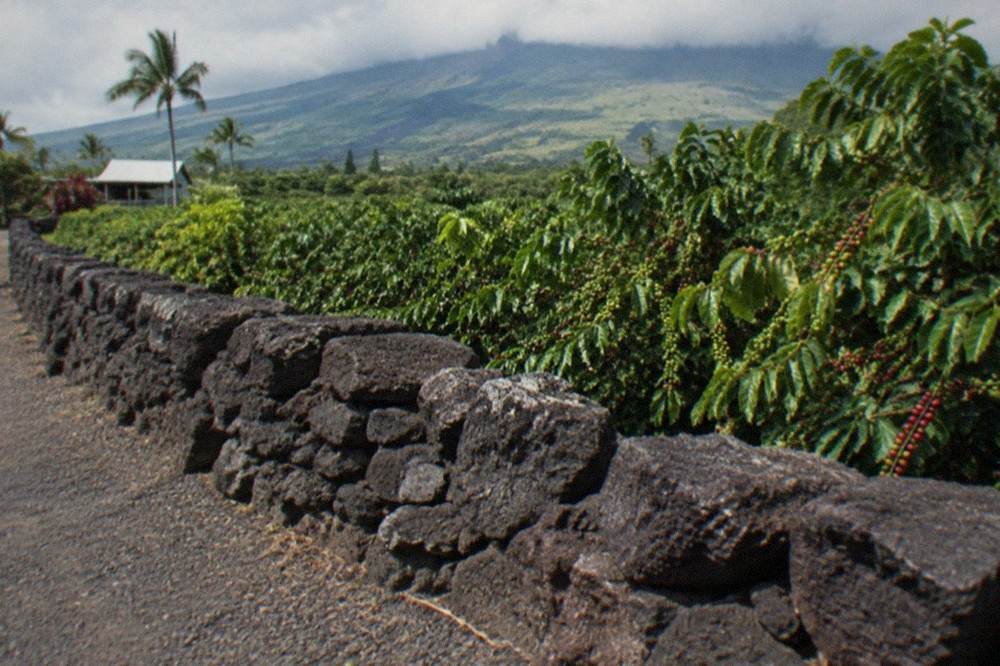
The narrowness of the belt is not a marketing flourish. Bearing acreage for all of Hawaii coffee was 6,500 acres in the 2025-26 season, down 500 acres from the season before, and Kona's share of even that number is a fraction. When a growing region is two miles wide, there is a hard ceiling on supply, and the 2025-26 forecast of 17.8 million pounds of cherry statewide, down 20 percent from the prior season, shows how much a bad year can shrink it further. Pests add pressure too: the coffee berry borer has been established on Hawaii Island since 2010, and in June 2026 the state board designated Lanai and Kauai as infested as well, which means Kona farmers spend real money on sanitation, pruning and monitoring that farms in uninfested regions do not. For a full map of the districts, farms and drive times, the Kona coffee belt guide breaks the ribbon down mile by mile.
Why does the law protect the name?
Hawaii law requires that any coffee labeled with a Hawaii geographic origin, including Kona, state the exact percentage of Hawaii-grown coffee on the front label, and a "Kona blend" must currently contain at least 10 percent Kona beans, a minimum that rises to 51 percent on July 1, 2027. The rules took effect on July 1, 2024 under Act 211 and Act 198, and they exist because the name was being borrowed by products with barely a trace of the real thing.
The 10 percent minimum sounds absurd until you hear the history. For decades, a bag could say "Kona blend" while containing 90 percent cheap beans from elsewhere, and shoppers paid a premium for a name rather than a product. The 2024 rules changed the mechanics: the identity statement must lead with the percentage, a "Contains:" line must list every origin in descending order, and "Kona Coffee" with no qualifier now implies 100 percent Kona and is non-compliant on a blend. The state's Measurement Standards Branch published the guidelines, and you can read the full labeling rules directly. The scheduled jump to a 51 percent minimum in 2027 is the biggest change to the industry in a generation, and it is already reshaping what "Kona blend" means on a shelf.
| Label you might see | What it legally means | What to watch for |
|---|---|---|
| 100% Kona Coffee | Beans grown only in North and South Kona districts, graded under Chapter 147 HRS | The only label guaranteeing all-Kona content |
| 10% Kona Coffee Blend | At least 10% Kona beans, other origins listed on the front | Minimum rises to 51% on July 1, 2027 |
| "Contains:" line | All origins and percentages, descending order | Required on the front label since July 2024 |
| 100% Hawaiian | 100% grown and processed in Hawaii, including decaffeination | Not the same as 100% Kona |
| 100% Kona Seal of Approval | Voluntary Kona Coffee Council certification with a green miller's audit trail | A helpful extra check, not a legal requirement |
The Kona Coffee Council, a nonprofit grower organization, administers the voluntary 100% Kona Seal of Approval, which adds a documented audit trail from the green miller onward. You can check the program at the Kona Coffee Council's site. None of this is paperwork for its own sake. Every enforcement action protects the price premium that keeps small Kona farms viable, and the premium is what pays for hand-picking. If you want to know which bags at home pass these tests, the best Kona coffee brands guide reads labels the same way.
Reading the label matters most at the airport gift shop, which is where most visitors first meet Kona coffee. A bag printed with a big "Kona" and small print elsewhere may be a 10 percent blend, and the front label's "Contains:" line will say so plainly since the 2024 rules. Enforcement is real but complaint-driven, and the state has added retail inspections rather than new staff, so the front label is your best instrument, not an assumption. If a price looks too good for 100% Kona, the label is usually the reason.
How is Kona coffee picked and dried?
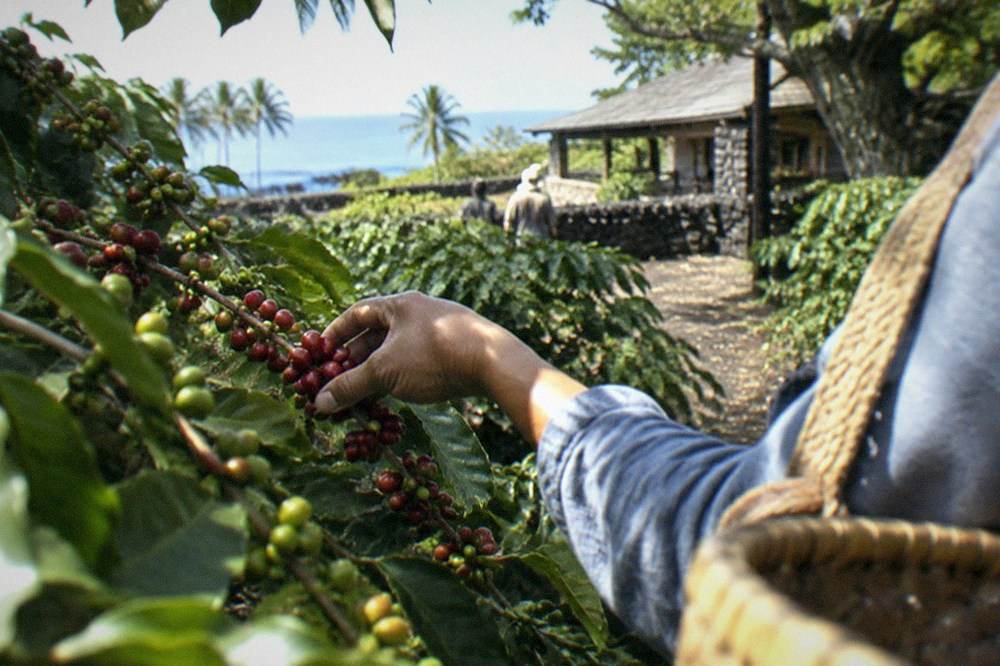
Kona coffee is hand-picked in multiple rounds from late August through January, because cherry on the same branch ripens at different times, and the ripe fruit is then wet-milled, fermented or washed, and sun-dried on raised decks called hoshidana before dry milling and roasting. Machine stripping, which is how most of the world's coffee is harvested, would mix ripe and unripe fruit and flatten the cup. The hand work is not nostalgia, it is quality control.
The harvest calendar drives everything. Picking peaks October through December, with lower-elevation South Kona farms starting earlier in late August and higher farms finishing later. A single tree gets walked several times across the season, each pass taking only the cherry at full red color. Pickers measure their day in pounds of cherry, and at a record average farm-gate price of $2.51 per pound of cherry in the 2023-24 season, with 2025-26 green prices holding elevated because of the short crop, every pound matters to both the farm and the picker. After picking comes processing: the cherry's skin comes off the same day or within a day, the beans ferment briefly to loosen the mucilage, then they dry in the sun on the hoshidana, rolling roofs that slide over the beans when the afternoon clouds open up. That drying stage is where the belt's weather earns its keep a second time, since slow sun-drying on the same slope where the cherry grew is a luxury almost no other coffee region can afford. More of these guides are collected on Kona Coffee Tours.
The hoshidana deserves a sentence of its own, because it is the belt's most photogenic piece of engineering. The drying deck sits under a roof on rails, so a farmer can roll it open for the reliable morning sun and roll it shut the moment the afternoon clouds arrive, without ever moving the beans. Before the mill, before the roaster, that simple sliding roof is what keeps a small farm's whole season from spoiling in one rainstorm. The same logic runs through the wet mill: cherry is processed within hours of picking, which is only possible because the mill is a short truck ride from the rows. In most coffee countries, fruit travels for days before processing, and the difference shows in the cup as cleaner, brighter flavor.
| Season | Months | What is happening on the farm | What a visitor sees |
|---|---|---|---|
| Bloom | Mainly January to April | Rain after dry spells triggers flowering, white blossoms | Trees covered in white flowers, a faint jasmine scent |
| Fruit development | Roughly April to August | Green berries swell and harden | Full green canopies, quiet farms |
| Early harvest | Late August to September | First picking rounds, lower elevations first | Hand-picking begins, wet mills running |
| Peak harvest | October to December | Multiple picking rounds, milling and drying at full speed | Picking, pulping, sun-drying decks, the busiest months |
| Off-season | December to February into spring | Pruning, farm maintenance, last lots milled | Quieter farms, young green berries, flowering starting |
Seeing the process in person is the fastest way to understand it, and timing matters: October through December is when the drying decks are full and the mills run hardest. The Kona coffee harvest season guide lays out the whole calendar, and the free Kona coffee tours guide lists farms you can walk onto at no cost.
What does Kona coffee taste like?
Kona coffee is known for a smooth, low-acidity cup with medium body and a clean sweetness, often showing notes of nut, caramel, brown sugar and subtle fruit, without the sharp bite that high-grown or heavily processed coffees can carry. The slow ripening in mild temperatures is what builds that profile: the seed accumulates sugars and complex compounds over a longer maturation than a hot lowland farm allows, and the careful hand-sorting keeps unripe, bitter fruit out of the lot.
Taste is where the belt's geology becomes something you can actually put in your mouth. Volcanic soil contributes minerals; the day-night temperature swing slows the cherry; sun-drying on open decks avoids the hurried, sometimes musty flavors that mechanical drying can introduce. Roasters matter too, and Kona's small-farm structure means most lots are roasted in small batches close to where they grew. The honest caveat is that Kona is not the most extreme coffee on earth. If you want a loud, acidic, fruit-forward cup, some African coffees will out-shout it. Kona's appeal is balance: gentle, sweet, aromatic, and easy to drink black. That is also why it converts skeptics who normally load their coffee with milk and sugar.
Roast level changes the conversation more than origin does at the margins. A light roast keeps the floral and citrus top notes and shows the belt's terroir most directly; a medium roast, the one most Kona farms pour by default, leans into caramel and nut; a dark roast trades delicacy for body and a smoky finish. Many farms pour two or three roasts side by side at a tasting precisely so you can watch the same bean become three different coffees. If you buy a bag home, buy the roast you liked at the table, not the one the shop calls its signature, because the tasting is the only test that counts.
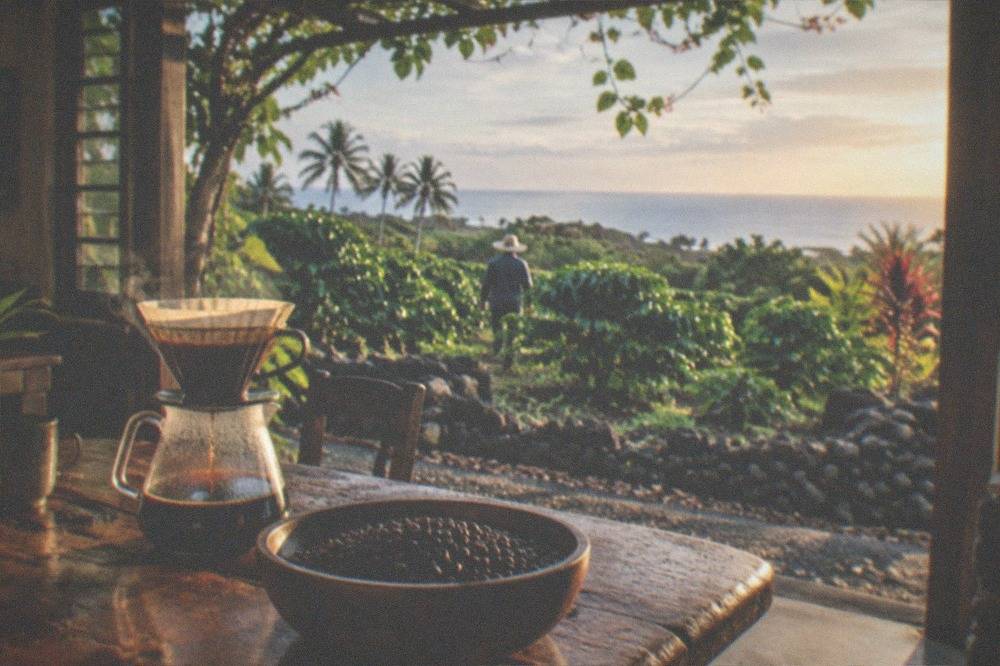
The best way to find your own answer is a guided tasting, and the Kona coffee tasting guide explains how farms run flights and what to look for between roasts. If you would rather taste at the source, a farm walk that ends in a cupping session is the format built for exactly this question.
The "Organic Farm and Mill, 2 Hours" tour at Mountain Thunder, 4.8 from 27 reviews and from $30, is the longest farm walk on the roster and the one that shows the most of the chain this page has described: trees, processing, roasting and a tasting at the end, all on one campus 10 minutes north of Kailua-Kona.
So is the price justified?
At roughly $25 to $35 per pound for authentic milled green Kona and considerably more for roasted retail, Kona coffee costs several times the supermarket price, and the money pays for hand-picking in a two-mile-wide appellation after a 20 percent statewide crop drop, so the price reflects real scarcity and labor rather than pure branding. The 2025-26 season's short supply kept green prices elevated, and nothing about the 2027 blend-rule change will make genuine 100% Kona cheaper, since it restricts what can even carry the name.
Compare the inputs honestly. A mechanized farm in a broad lowland region strips everything in one pass and dries it fast; a Kona farm walks its rows five or more times a season, dries in the island sun, and mills in small lots. You are paying for hours of human labor per pound, for a legal appellation with a hard acreage ceiling, and for a crop that a single bad weather year can cut by a fifth. Whether that is worth it is a personal call, and the is Kona coffee worth the price write-up works through the math in detail. What is not in dispute is where the money goes.
For visitors, the cheapest way to test the claim is to taste before you buy. Several farms pour free or near-free samples, and a short paid tour with a tasting included usually costs less than a single bag of roasted Kona. The how much does a Kona coffee tour cost article prices out the options from the $5 sampler upward.
The small-group farm walk at Hala Tree, capped at 12 guests and rated 4.9 across 80 reviews, is the highest-rated farm walk on the roster, and a low-risk way to see the belt's trees and taste its coffee in a single hour at the farm gate in Captain Cook.
Common Questions About Kona Coffee
what is so special about kona coffee?
Kona coffee is special because it grows in a legally defined belt about two miles wide on Hawaii Island's west slopes, with sunny mornings, afternoon clouds, roughly 60 inches of rain and porous volcanic soil. It is hand-picked in multiple rounds, sun-dried, and known for a smooth, low-acidity, sweet cup, and state law strictly limits who may use the name.
Is Kona coffee really worth it?
That depends on what you value. You are paying for hand-picking, a tiny appellation and a 2025-26 crop that dropped 20 percent statewide. If balance and smoothness matter to you, most tasters say yes; if you want maximum acidity or a bargain, other origins deliver more per dollar.
What does 100% Kona mean on a label?
It means the beans were grown only in the North and South Kona districts and meet Hawaii's green coffee grading standards. "Kona Coffee" with no percentage implies 100 percent Kona; anything less must state its percentage and a "Contains:" origin list on the front label.
Why is Kona coffee so expensive?
Scarcity and labor. The belt is about two miles wide, every cherry is picked by hand across several rounds from late August through January, and the statewide crop fell 20 percent in the 2025-26 season. Cherry prices hit a record $2.51 per pound in 2023-24 and green Kona has stayed elevated since.
When is the best time to visit Kona coffee farms?
October through December, when picking, milling and sun-drying are all running at once. The harvest runs late August through January overall, and the Kona Coffee Cultural Festival, November 6 to 15 in 2026, lands right in the middle of it.
What is a Kona blend?
A coffee that currently must contain at least 10 percent Kona beans, with the percentage and all other origins printed on the front label. That minimum rises to 51 percent on July 1, 2027, which will force many blended products to reformulate or drop the name.