Heavenly Hawaiian Kona Coffee Farm Tours: Prices, Times and How to Book
Heavenly Hawaiian runs two bookable farm walks on its Bishop Road farm above Holualoa: a near-free sampler and a full-hour tour. Here is what each one covers, what the gift-shop credit actually means, and how the listings compare with booking the farm directly.
Short answer
Heavenly Hawaiian offers a five-dollar sampler walk and a thirty-three-dollar full-hour farm tour, both bookable online, plus direct bookings with the farm at twenty-five to twenty-seven dollars per adult. The sampler fee is credited to the gift shop. Tours run hourly from 9am to 4pm, Monday through Saturday, about eight minutes from Kailua-Kona.
Heavenly Hawaiian Kona Coffee Farms sits on Bishop Road above the village of Holualoa, on the slope where the Kona coffee belt does its best work. The farm is one of the most-visited coffee properties on the island, and it runs two distinct bookable walks: a short sampler that costs five dollars and a full-hour tour that costs thirty-three. The difference between them confuses a lot of visitors, because the two listings look similar, leave from the same address, and are run by the same guides.
This guide lays out what each tour covers, how the five-dollar fee turns into gift-shop credit, what the grounds themselves are like, and how booking through a live listing compares with booking the farm directly. Every price and rating here comes from the farm's own listing details and its verified booking pages, so you can plan the visit without guessing.
Where is the Heavenly Hawaiian farm and what does a visit look like?
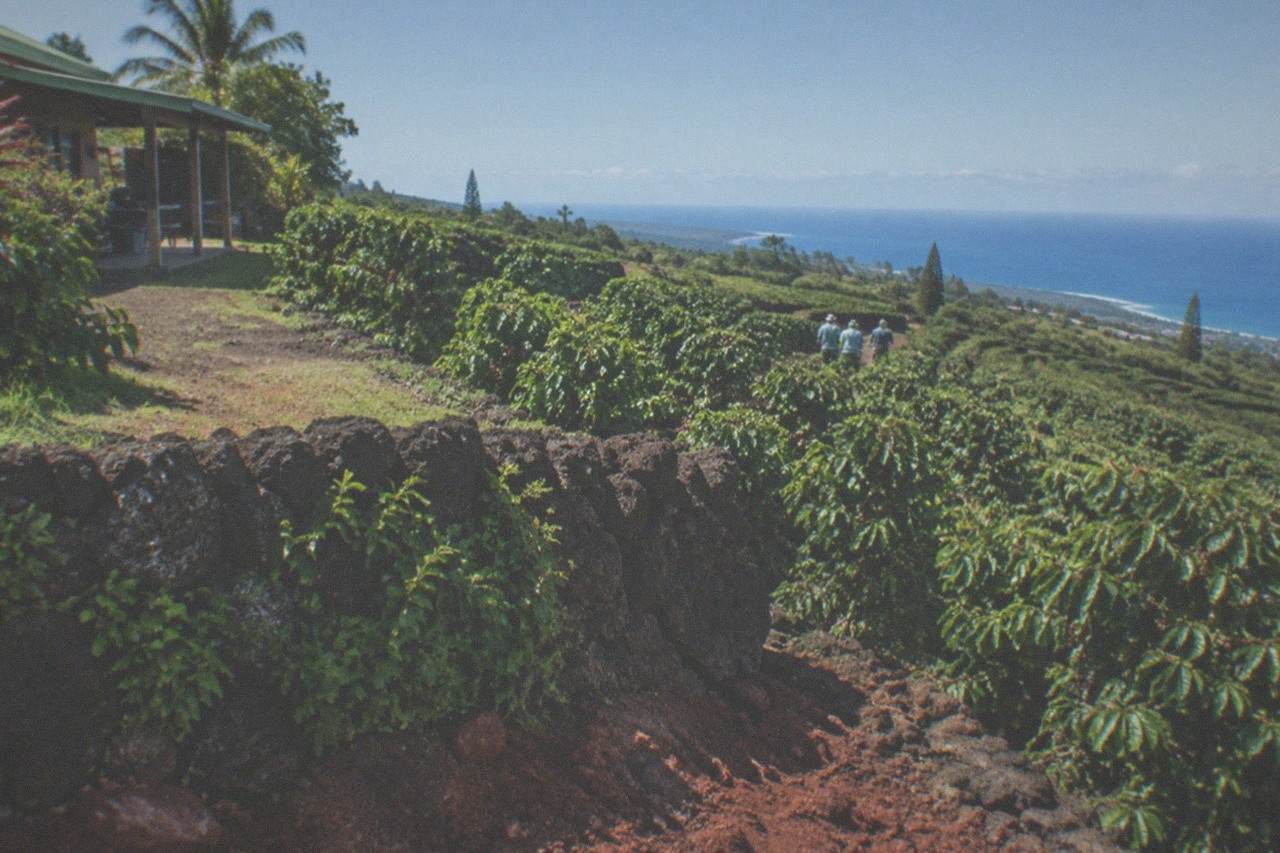
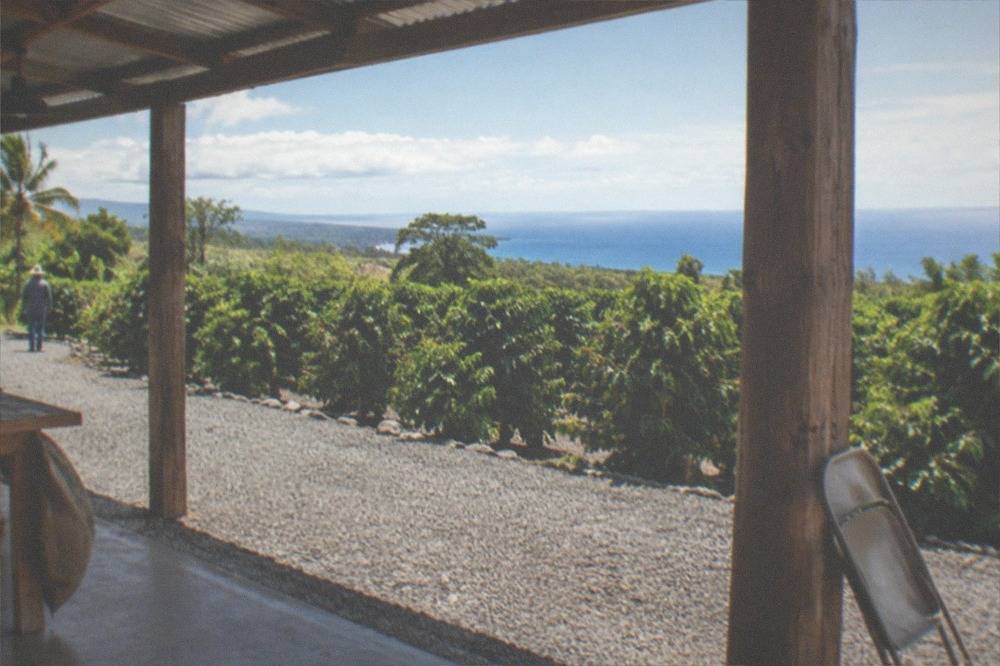
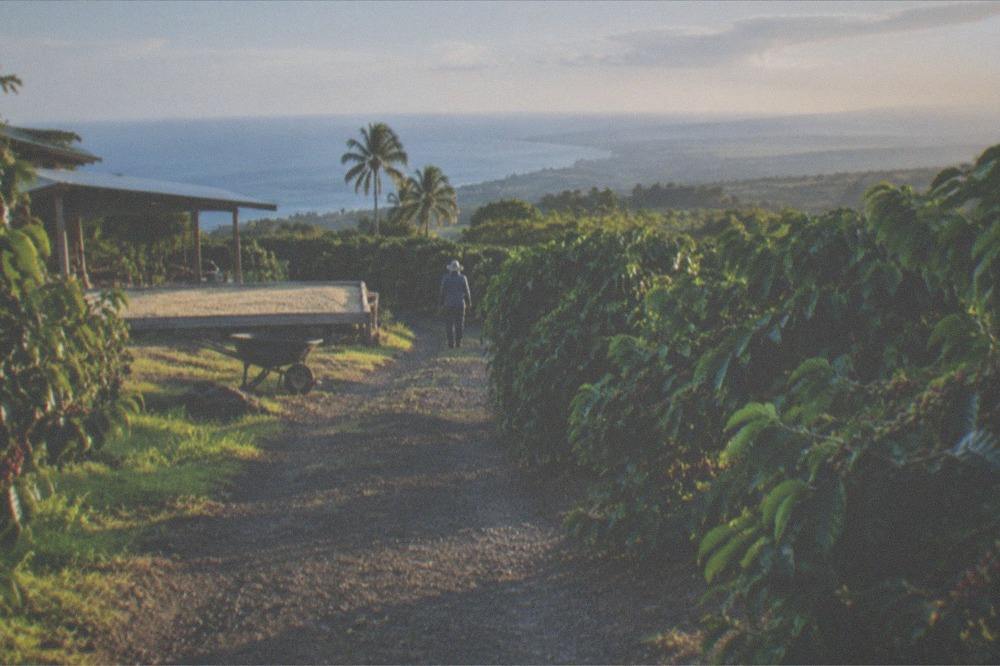
The farm sits at 78-1136 Bishop Road in Holualoa, roughly eight minutes and 3.9 miles up the hill from Kailua-Kona, on the western slopes above the coffee belt's core zone. Visits are walking tours across hillside coffee rows, ending with tastings of the farm's own 100% Kona roasts, and the property is small enough that an hour covers it comfortably.
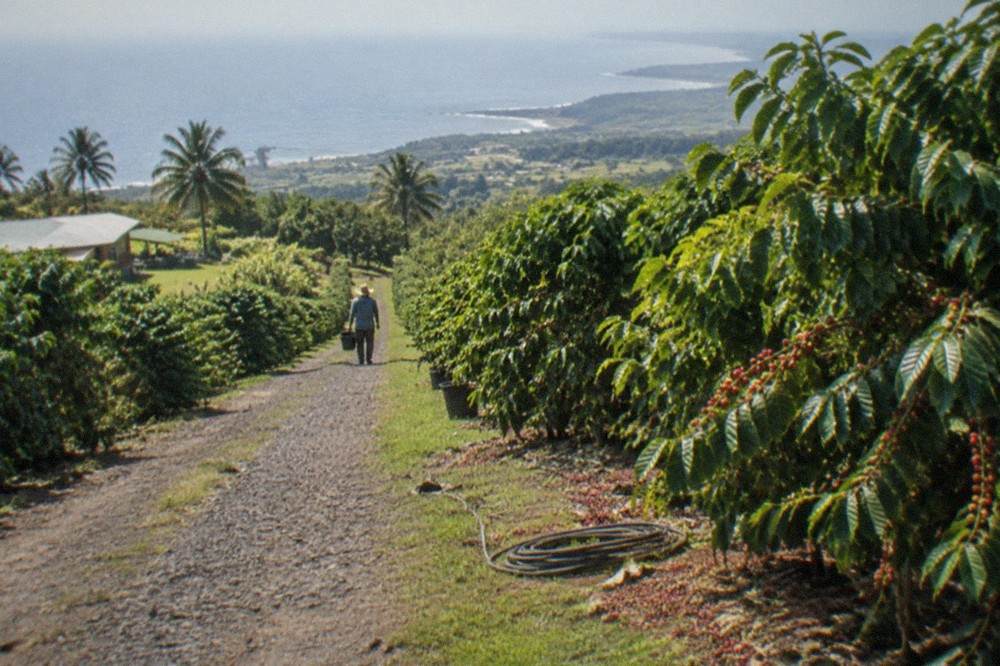
Holualoa is the small art-town stop on the belt road between Kailua-Kona and Captain Cook. The drive up from town is short, about eight minutes via Palani Road and Highway 180, though exact times vary between six and twenty-three minutes depending on where you start and the route you take. Once you are in the village, Bishop Road climbs a little further, and the farm's entrance is well signed.
The setting matters more than the distance. The Kona coffee belt is a narrow strip, roughly thirty miles long north to south and only about two miles wide, running between roughly 500 and 3,200 feet of elevation on the slopes of Hualalai and Mauna Loa. Heavenly Hawaiian's hillside blocks sit inside that strip, which is why the farm can label its coffee 100% Kona: the beans are grown only in the North and South Kona districts, which is what the name legally requires. The Kona Coffee Council administers a voluntary 100% Kona Seal of Approval for exactly this kind of single-origin claim.
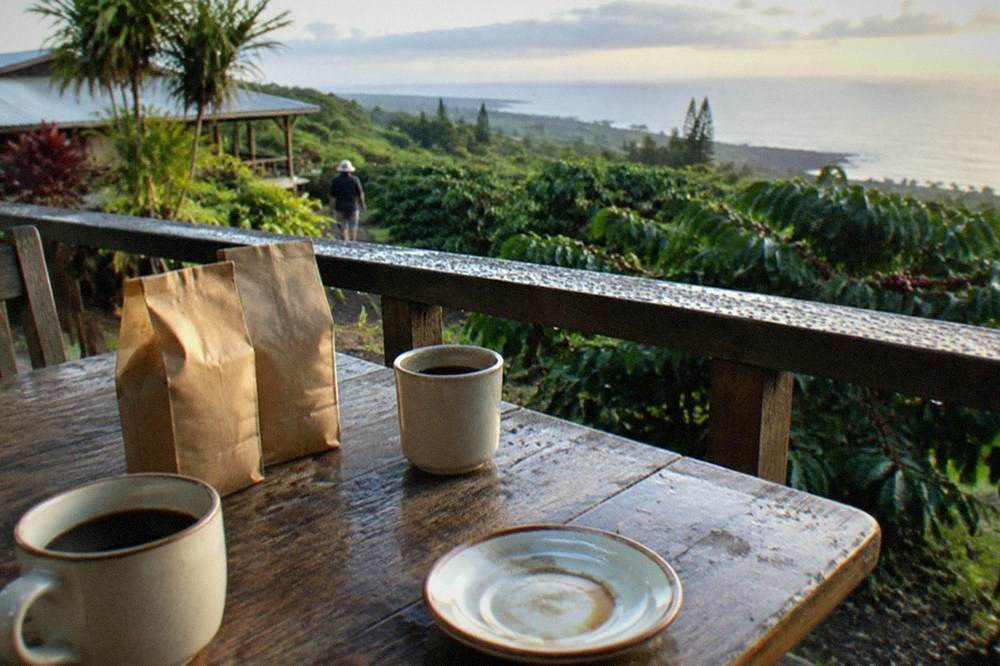
A visit follows a simple arc. You check in, walk the rows with a guide who explains the planting, picking and processing cycle, then finish with a tasting. The farm grows its own trees and roasts on-site, so the tasting is of coffee from the ground you just walked. Plan on being there for the tour length plus a little time in the shop afterward, especially if you arrive with the five-dollar credit in hand.
How much do Heavenly Hawaiian farm tours cost?
The bookable sampler costs from five dollars per person, and the fee is credited to the farm gift shop. The full-hour tour costs from thirty-three dollars per person. Booking direct with the farm costs roughly twenty-five to twenty-seven dollars per adult for the same hour-long walk, with children under twelve free on that direct rate.
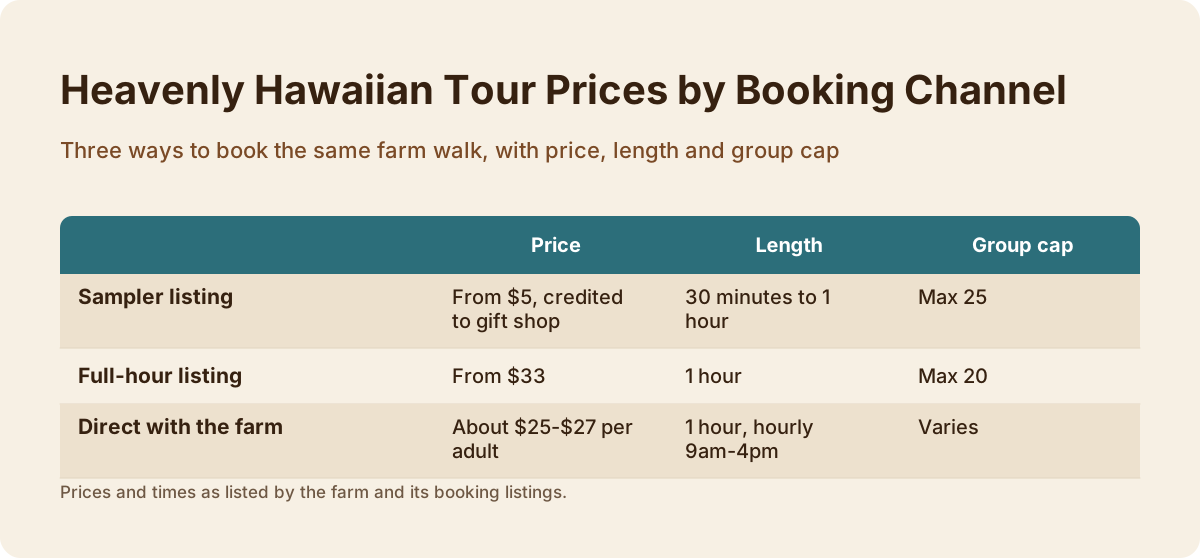
That three-tier price structure is the single most confusing thing about this farm, so it is worth spelling out plainly. There are two bookable listings and one direct channel, and they are not the same product at three prices. The five-dollar listing is a genuinely short sampler, thirty minutes to an hour, capped at twenty-five travelers. The thirty-three-dollar listing is the fuller hour, capped at twenty. The direct rate is the farm's own booking page for its standard one-hour walk.
| Booking channel | Price | Tour length | Group cap | What it includes |
|---|---|---|---|---|
| Sampler listing | From $5, credited to gift shop | 30 minutes to 1 hour | Max 25 | Short farm walk plus tasting |
| Full-hour listing | From $33 | 1 hour | Max 20 | Complete farm walk plus tasting |
| Direct with the farm | About $25-$27 per adult | 1 hour, hourly 9am-4pm | Varies | Guided walk, tastings of 5 award-winning 100% Kona coffees, children under 12 free |
The direct price deserves its own sentence because it is easy to misread: those twenty-five to twenty-seven dollar figures are direct booking with the farm, through its own reservation page, not through either bookable listing. The bookable listings are five dollars and thirty-three dollars respectively. None of these is a "free tour", and the farm's free-claim status should never be confused with the genuinely free walks elsewhere on the belt, which are covered in the free Kona coffee farm tours guide.
For context, paid farm walks across the Kona belt generally run thirty to sixty-plus minutes and cost somewhere between twenty and sixty dollars, so the thirty-three-dollar full hour sits in the middle of the normal range, and the five-dollar sampler sits far below it. If you are comparing the whole belt's options before committing to this farm, the Kona coffee farm tours master guide breaks down every bookable walk side by side.
What is the five-dollar sampler tour versus the full-hour tour?
The five-dollar "Short Sampler Walk, Max 25" is a brief introduction, thirty minutes to an hour, for up to twenty-five travelers, with the fee credited to the gift shop. The thirty-three-dollar "Full-Hour Farm Walk, Max 20" spends a full hour on the same property with a smaller cap of twenty, and it is the version to pick if you want the complete seed-to-cup story rather than a quick look.
The two listings are run by the same farm with the same guides, and both end in a tasting. The differences are length, depth and group size. The sampler moves quickly, shows you the highlights of the rows and the processing setup, and gets you to the cups sooner. It suits visitors who are passing through Holualoa with limited time, families with restless kids, or anyone who mainly wants the tasting and the shop. The full hour slows everything down: more time among the trees, more of the picking-and-processing explanation, more questions answered.
Check-in differs too, and this trips people up on arrival day. The sampler meets poolside by the navy blue umbrella. The full-hour tour checks in at the driveway pavilion, where you follow the orange signs. Both are at 78-1136 Bishop Road, but walking to the wrong meeting point costs you the first ten minutes of your slot.
| Sampler listing | Full-hour listing | |
|---|---|---|
| Decision name | "Short Sampler Walk, Max 25" | "Full-Hour Farm Walk, Max 20" |
| Price | From $5, credited to gift shop | From $33 |
| Length | 30 minutes to 1 hour | 1 hour |
| Group cap | 25 travelers | 20 travelers |
| Check-in | Poolside, navy blue umbrella | Driveway pavilion, orange signs |
| Rating | 5.0 from 188 reviews | 4.9 from 265 reviews |
| Best for | A quick taste and shop visit | The full farm explanation |
Both listings carry strong review pools: 5.0 from 188 reviews on the sampler and 4.9 from 265 reviews on the full hour. Those are real, substantial pools for a single farm's walks, and the near-identical scores suggest the format choice matters less than people fear. Pick on time and depth, not on quality.
The full-hour listing also carries its own urgency signal from the booking page: it has been booked four times today. That is a modest number, but it tells you the hour-long walk fills on a rolling basis, so if you are visiting during a busy week it pays to lock a time in advance rather than driving up on spec.
If the short-versus-full choice still feels close, a reasonable rule of thumb from the numbers: if you would spend thirty dollars in the gift shop anyway, the sampler is effectively free after the credit, and the full hour is the better buy only when you genuinely want the longer walk.
How does the five-dollar gift-shop credit work?
You pay five dollars to book the sampler, and that five dollars comes back to you as credit to spend in the farm's gift shop on coffee, gifts or other merchandise. It is a near-free tour in practice, but it is not a free tour, and the credit applies to shop purchases rather than being refunded as cash.
The mechanics are simple. The listing fee is collected at booking, and when you show up, the farm applies that amount to whatever you buy in the shop. Bags of the farm's 100% Kona roasts are the obvious use, since you will have just tasted them. If you buy nothing, the five dollars stays spent. That is why this site calls the sampler near-free rather than free, and the distinction matters when you are budgeting a day on the belt.
The credit changes the arithmetic of which tour to book. A visitor who intends to take coffee home anyway, and most visitors to a Kona farm do, gets the sampler's walk and tasting for nothing out of pocket beyond what they were already going to spend. A visitor who wants no shop stop gets a five-dollar short walk, which is still the cheapest bookable coffee experience on this roster by a wide margin.
One caution: do not expect the credit to stack with the full-hour tour. The thirty-three-dollar listing does not carry a gift-shop credit; its price buys the longer walk and the smaller group. The credit belongs to the sampler alone.
Should you book direct or through the live listing?
Booking direct with the farm costs about twenty-five to twenty-seven dollars per adult for the standard one-hour walk, hourly from 9am to 4pm Monday through Saturday, with children under twelve free. The bookable listings cost five and thirty-three dollars for the sampler and full hour respectively, and both show live availability with free cancellation before payment.
There is no wrong answer here, only a fit question. Direct booking suits travelers who know their date and time, want the farm's own schedule, or are bringing children, since under-twelves go free on the direct rate. The live listings suit travelers who want to see a calendar of open slots, prefer free cancellation before paying, or want the sampler format, which exists mainly as a bookable listing. More of these guides are collected on Kona Coffee Tours.
The price gap between direct and the thirty-three-dollar full-hour listing is small, a few dollars per adult, and it narrows further if the direct rate lands at the top of its range. What the listing buys you for that difference is the booking-page calendar, the cancellation window and the fixed twenty-person cap. What direct buys you is the farm's own schedule and the child pricing. Families with kids under twelve usually come out ahead direct; solo travelers and couples usually find the listing simpler.
The farm's own booking runs Monday through Saturday, hourly from 9am to 4pm, which gives you eight departure windows on a normal day. The bookable listings draw from the same capacity, so popular mid-morning slots go first on both channels. If you are planning around other stops on the belt, the visiting Kona coffee farms guide covers drive times and how to sequence a day between Holualoa, Honalo and Captain Cook.
The full-hour listing, "Full-Hour Farm Walk, Max 20", is the one most visitors should compare against the direct rate, since both are the same hour on the same farm.
Whichever channel you choose, book before you drive up. The farm is eight minutes from town, but the slots are not infinite, and mid-morning weekend hours fill first (see Living History Farm).
What do you actually see on the Heavenly Hawaiian grounds?
The walk covers planted coffee rows on the hillside, the farm's processing and roasting setup, and a tasting of the farm's award-winning 100% Kona coffees at the end. The sampler compresses this into a shorter loop; the full hour spends real time in the rows and at each processing stage.
The farm is a working property, not a museum piece, and what you see depends partly on the season. The Kona harvest runs late August through January, with peak picking from October to December. Visit in that peak window and you will likely see hand-picking in progress, cherry moving through the wet mill, and beans drying in the sun, which is the most rewarding version of any Kona farm walk. Visit between January and April and you may catch the bloom instead, the white flower flush that follows dry spells and rain, and the rows will smell sweet rather than look busy.
Outside the harvest, the walk is quieter: green berries on the trees, pruning and farm maintenance, and a tasting room that runs year-round. None of that makes the tour worse, but it changes what you photograph. If seeing coffee actually being picked and milled is the point of your visit, aim for October through December and book the full hour, because the sampler's short loop spends less time at the active stations.
The tasting is the constant. The farm pours its own roasts, the same coffees sold in the shop, and the guides talk through what distinguishes them. For many visitors this is the part that justifies the whole stop: tasting a 100% Kona coffee on the farm that grew it, minutes after walking the rows it came from.
When is the best time to visit the Heavenly Hawaiian farm?
Tours run hourly from 9am to 4pm, Monday through Saturday, and the best months to see active harvest are October through December, when picking, milling and drying are all running. The Kona Coffee Cultural Festival, November 6 to 15 in 2026, is the busiest and most interesting window, with farm tours and events across the belt.
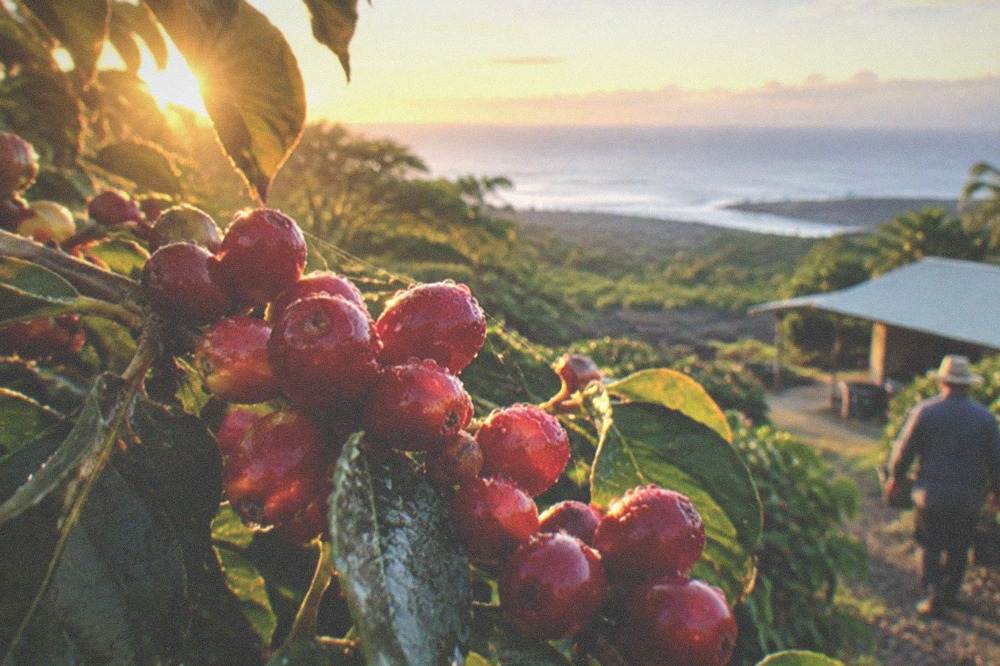
Within a given day, the morning slots have a practical edge. Kona's belt climate is famous for sunny mornings and afternoon cloud cover, roughly sixty-plus inches of rain a year arriving mostly later in the day, so a 9am or 10am walk usually gets you the view and the photographs. Afternoon slots are easier to book and cooler under the clouds, but the hillside panorama fades.
Within the year, the calendar splits three ways. October to December is peak harvest and peak interest. Late August to September is still harvest but with lighter crowds, a good shoulder choice. January to April is bloom and pruning season, quieter on the farm and quieter on the roads.
The festival window deserves special mention. The Kona Coffee Cultural Festival runs November 6 to 15 in 2026, its fifty-fifth year, with a lantern parade, the Holualoa Coffee and Art Stroll, cupping competition awards and multiple farm tour experiences across the district, per the official festival schedule. Holualoa sits at the center of several festival events, and Heavenly Hawaiian is one of the farms that sees festival-week traffic. Book early for those dates.
| Period | What you see on the farm | Crowd level | Booking advice |
|---|---|---|---|
| October-December | Active picking, milling, sun-drying at peak | Highest | Book the full hour well ahead |
| Late August-September | Early harvest, lighter activity | Moderate | Shoulder-season, easier slots |
| November 6-15, 2026 | Harvest peak plus festival events in Holualoa | Highest | Book weeks ahead for festival week |
| January-April | Bloom, young green berries, pruning | Lowest | Walk-up odds are better, still book ahead |
How does Heavenly Hawaiian compare with other Kona farm walks?
Heavenly Hawaiian's sampler and full hour sit at the accessible end of the belt's price range, from five and thirty-three dollars, against Hala Tree's ten-dollar "Small-Group Farm Walk, Max 12" and Mountain Thunder's thirty-dollar two-hour "Organic Farm and Mill" walk. The farm's strength is convenience: eight minutes from Kailua-Kona, hourly departures and a strong review pool on both listings.
If the deciding factor is group size rather than price, Hala Tree's "Small-Group Farm Walk, Max 12" at from ten dollars is the tighter experience, with a 4.9 rating from 80 reviews. If it is depth, Mountain Thunder's "Organic Farm and Mill, 2 Hours" at from thirty dollars adds a working mill and is the longest farm walk on the roster, rated 4.8 from 27 reviews. Heavenly Hawaiian splits the difference: more polished than most, closer to town than nearly all, and the only belt farm offering a near-free credited sampler.
| Farm walk | Price | Length | Group cap | Rating | Standout feature |
|---|---|---|---|---|---|
| "Short Sampler Walk, Max 25" (Heavenly Hawaiian) | From $5, credited to shop | 30 min-1 hr | 25 | 5.0 from 188 reviews | Near-free credited sampler |
| "Full-Hour Farm Walk, Max 20" (Heavenly Hawaiian) | From $33 | 1 hour | 20 | 4.9 from 265 reviews | Full hour, close to town |
| "Small-Group Farm Walk, Max 12" (Hala Tree) | From $10 | 1 hour | 12 | 4.9 from 80 reviews | Smallest standard group |
| "Organic Farm and Mill, 2 Hours" (Mountain Thunder) | From $30 | 2 hours | Not stated | 4.8 from 27 reviews | Working mill, longest walk |
For visitors who want coffee plus more than coffee, the strongest-reviewed option on this site's whole roster is the "Chocolate Farm Combo, 3 Hours" at from fifty dollars, a 5.0 from 392 reviews experience that pairs the coffee story with chocolate and gift stops, running Tuesdays and Thursdays at 9am. It is a half-day commitment rather than an hour, and it has been booked five or more times today, but for a visitor building one big food-and-farm day on the island it is the belt's best-reviewed ticket.
A sensible pairing for a full belt day: Heavenly Hawaiian's full hour in the morning, the Holualoa village galleries after, then lunch and the drive south toward Captain Cook, where more farms and the Living History Farm fill an afternoon. For the sampler crowd, the five-dollar walk plus gift-shop credit plus a village stroll is a pleasant two-hour Holualoa stop on its own.
Common Questions About Heavenly Hawaiian Farm Tours
How much do Heavenly Hawaiian coffee farm tours cost?
The bookable sampler costs from five dollars per person, with the fee credited to the farm gift shop. The full-hour tour costs from thirty-three dollars per person. Booking direct with the farm costs about twenty-five to twenty-seven dollars per adult for the standard one-hour walk, with children under twelve free on that direct rate.
What is the difference between the five-dollar and thirty-three-dollar Heavenly Hawaiian tours?
The five-dollar sampler runs thirty minutes to an hour with up to twenty-five travelers and meets poolside by the navy blue umbrella. The thirty-three-dollar full-hour tour spends a complete hour on the farm with a cap of twenty travelers and checks in at the driveway pavilion, following the orange signs. Both end with tastings.
How does the Heavenly Hawaiian gift-shop credit work?
The five-dollar sampler fee is applied as credit toward purchases in the farm's gift shop, such as bags of its 100% Kona roasts. It is not refunded as cash, and it applies only to the sampler listing, not to the thirty-three-dollar full-hour tour.
When do Heavenly Hawaiian farm tours run?
Direct bookings run Monday through Saturday, hourly from 9am to 4pm. The bookable listings draw from the same daily capacity at the farm at 78-1136 Bishop Road, Holualoa, about eight minutes from Kailua-Kona.
Is the Heavenly Hawaiian farm tour worth it?
Both listings carry strong review pools: 5.0 from 188 reviews on the sampler and 4.9 from 265 reviews on the full hour. At five dollars credited to the shop, the sampler is among the lowest-cost coffee experiences on the Kona belt, and the full hour sits mid-range against the belt's typical twenty-to-sixty-dollar paid walks.
What is the best time of year to visit Heavenly Hawaiian?
October through December is peak harvest, with active picking, milling and drying on the farm. The Kona Coffee Cultural Festival runs November 6 to 15 in 2026 and brings festival events to Holualoa itself, so book ahead for that window. Morning slots get the sunny weather the belt is known for.
Heavenly Hawaiian earns its traffic honestly: it is the closest full coffee-farm experience to Kailua-Kona, it prices a sampler low enough to be near-free after the credit, and it runs often enough to fit almost any itinerary. Pick the sampler for a quick, cheap taste of the belt, or the full hour when the seed-to-cup story is the reason you drove up the hill. Either way, book the slot before you drive, and give yourself time in the shop afterward, because that is where the five dollars comes back to you.